
I asked myself the same thing one afternoon, standing in my kitchen, lunchbox in hand, running late and just wanting to heat my food.
Nobody gave me a straight answer, and that made me even more curious.
What was everyone so afraid of? And was that fear even based on facts?
So I went looking for real answers, not guesses.
In this blog, I will walk you through why stainless steel can be risky, when it is completely fine, how to use it safely, and the biggest myths worth dropping for good.
What You Need to Know About Stainless Steel and Microwaves

Stainless steel is one of the most common materials in kitchens today. But when it comes to microwaves, things get a little more complicated.
Not every container will behave the same way inside a microwave. The shape, grade, and condition of the steel all play a role in how safe it is.
Before you place anything metal inside your microwave, it helps to understand a few basics.
This section gives you a quick overview of how stainless steel and microwave energy interact, so you can make the right call every time.
Why Stainless Steel Can Be Dangerous in Microwaves
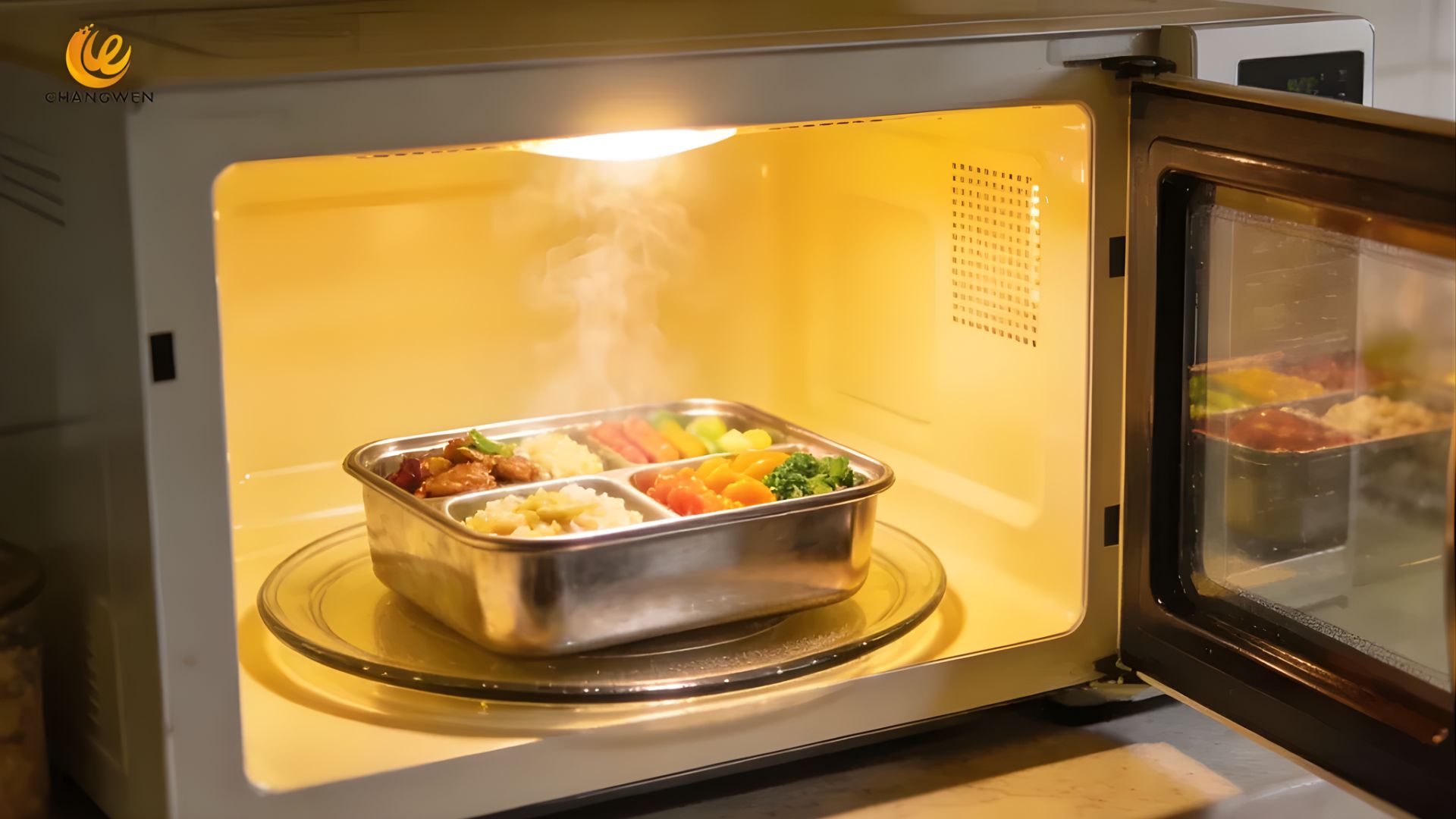
Microwaves work by sending out energy waves that heat food from the inside. Metal does not absorb these waves.
It reflects them. When stainless steel with sharp edges or thin walls sits inside a microwave, it can create sparks, known as arcing. This can damage your microwave and even start a fire.
Scratched or dented containers make this worse. The shape and thickness of the metal matter a lot.
Not all stainless steel handles microwave energy the same way, which is why it can feel confusing.
When Stainless Steel Is Safe to Microwave

Not all stainless steel will cause sparks, the right product, in the right condition, used the right way, can actually be microwave-friendly.
Microwave-Safe Stainless Steel Products
Some stainless steel products are built and tested specifically for microwave use. These include modern lunchboxes, food storage containers, and certain crisper boxes.
The key is the label. If the product says “microwave safe” or “microwaveable,” it has gone through proper testing.
I always check the bottom of the container before putting anything in the microwave. That one step makes a big difference.
Design and Material Considerations
The design of the container matters just as much as the material. Rounded corners and smooth edges help prevent sparks during heating.
Most safe products use 304 grade stainless steel, also called 18/8, which is durable and tested for safe use.
These containers go through strict safety checks before reaching store shelves. A well-designed container heats food without arcing or causing damage to your appliance.
Verified Safety Studies and Expert Opinions
Organizations like the British Stainless Steel Association (BSSA) have confirmed that properly designed stainless steel containers can be used safely in microwaves.
Studies show that approved containers heat food evenly with minimal splatter and no sparks. Experts point out that the shape, grade, and finish of the steel play a major role in safety.
When a product meets these standards, it performs reliably inside a microwave.
How to Safely Use Stainless Steel in a Microwave
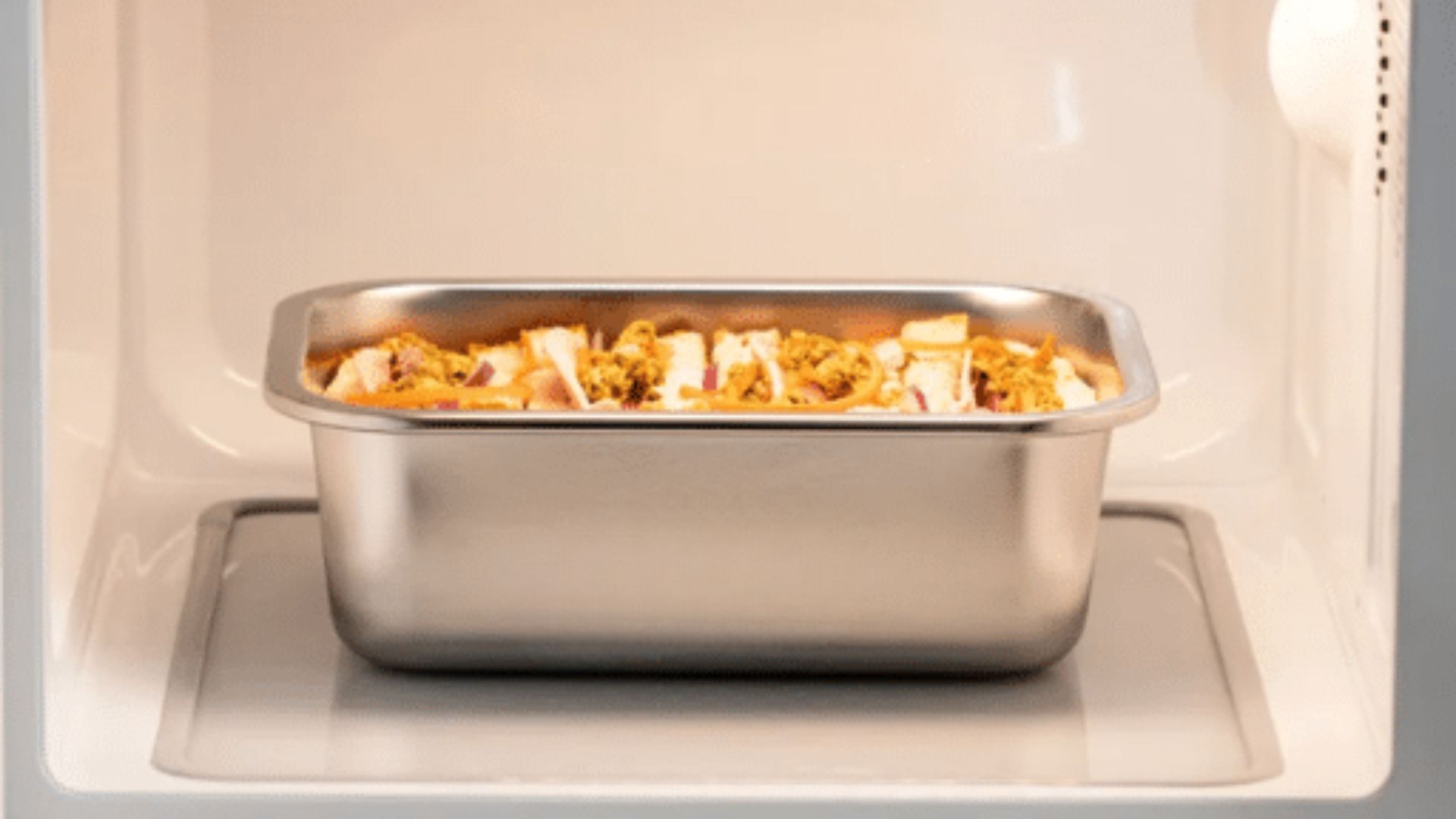
Following a few simple steps before and during heating can keep you, your food, and your microwave completely safe.
Check Before Use
Before placing any stainless steel container in the microwave, check the label. It should clearly say “microwave safe.”
Also look at the container closely. Avoid anything that is dented, scratched, or damaged in any way.
Even a small scratch can change how microwave energy reacts with the metal. I always do a quick check before heating. It takes ten seconds and prevents a lot of trouble.
Heating Tips
Getting the heating right is just as important as picking the right container. Here is what works best.
- Heat only one stainless steel container at a time
- Place it in the center of the microwave
- Make sure it does not touch the walls or rack
- Keep microwave power at or below 1000W
- Use short heating intervals instead of one long session
Short bursts of heat are always safer than long continuous runs.
Lid and Handling Precautions
Remove the lid before microwaving unless it is labeled microwave safe. A sealed container can build up pressure and cause problems.
Use oven gloves or a thick towel when taking the container out. Stainless steel heats food differently than glass or plastic.
The contents inside can get much hotter than the outside of the container feels. I learned this the hard way once. Now I always use gloves, no matter what.
Common Myths and Misconceptions
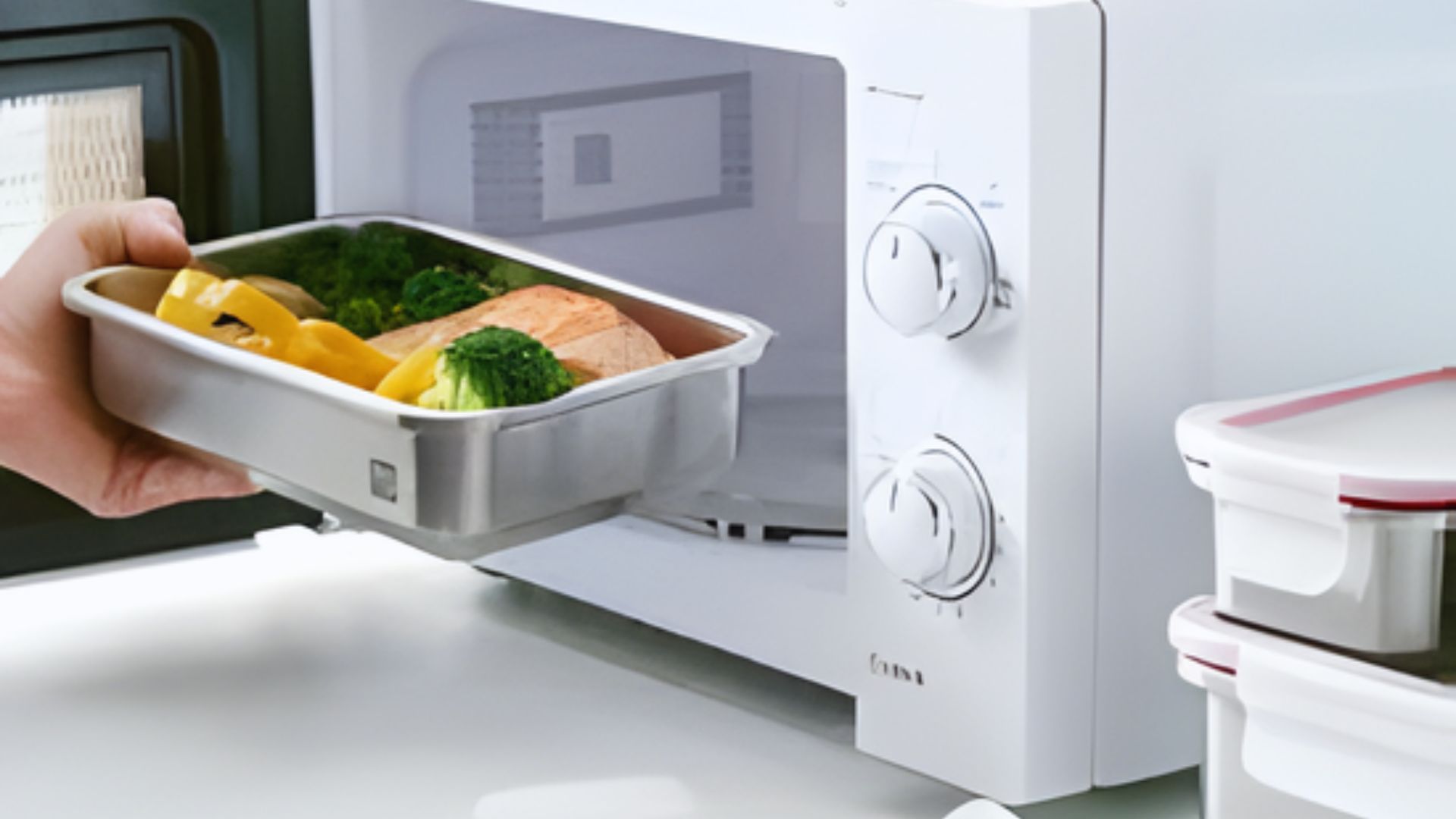
There is a lot of bad information floating around about metal and microwaves. Let me clear things up with three common myths.
Myth 1: All metal is unsafe in microwaves. Reality: Properly designed stainless steel containers, labeled microwave safe, can be used without sparks or appliance damage.
Myth 2: Microwave-safe stainless steel never sparks. Reality: Even labeled containers can spark if they are scratched, dented, or made from poor quality materials.
Myth 3: Microwaving metal heats food faster. Reality: Stainless steel may actually need slightly longer heating times compared to glass or ceramic.
Now that you know the facts, you can make smarter choices in the kitchen every time.
Tips for Choosing Microwave-Safe Stainless Steel
Picking the right container does not have to be complicated. A few simple checks go a long way. Here is what to look for.
- Look for the label. No label means no guarantee.
- Check the edges. Rounded corners and smooth surfaces are safer.
- Choose single-use containers. Not every container is built for repeated microwaving.
- Avoid stacking. One metal container at a time, always.
- Look for certifications. Tested products are always the safer choice.
The right container makes the whole process safer and simpler.
Conclusion
I used to toss my stainless steel lunchbox around without a second thought about the microwave. Then I read the label, and everything changed.
You do not need to overhaul your kitchen routine. Just check the label, inspect the container, and follow the simple steps I shared above.
Small habits make a real difference.
Found this helpful? Drop a comment below, share this post with someone who needs it, and check out our other kitchen safety guides!
Frequently Asked Questions
Can you microwave stainless steel containers?
Yes, but only if the container is labeled “microwave safe” and is free from dents or scratches.
What happens if you put regular stainless steel in the microwave?
It can cause sparks, damage the microwave interior, and in some cases, start a fire.
How do I know if my stainless steel container is microwave safe?
Check the bottom of the container for a “microwave safe” label or symbol before use.
Is 304 stainless steel safe for microwave use?
Yes, 304 grade stainless steel is commonly used in microwave-safe containers due to its durability and smooth finish.
Can stainless steel lids go in the microwave?
Only if the lid is separately labeled as microwave safe, otherwise remove it before heating.