
I dropped mustard on my favorite white shirt at a cookout. I blotted it fast. Still stained.
That one moment showed me just how sneaky mustard really is.
If you've been there, this article is for you. I'll cover why mustard stains are so stubborn, the first steps to take right away, and seven DIY fixes that real people swear by.
These are community-tested methods that work. No guesswork. No expensive products. Just clear, simple steps that actually get the job done.
Why Mustard Stains Are Hard to Remove
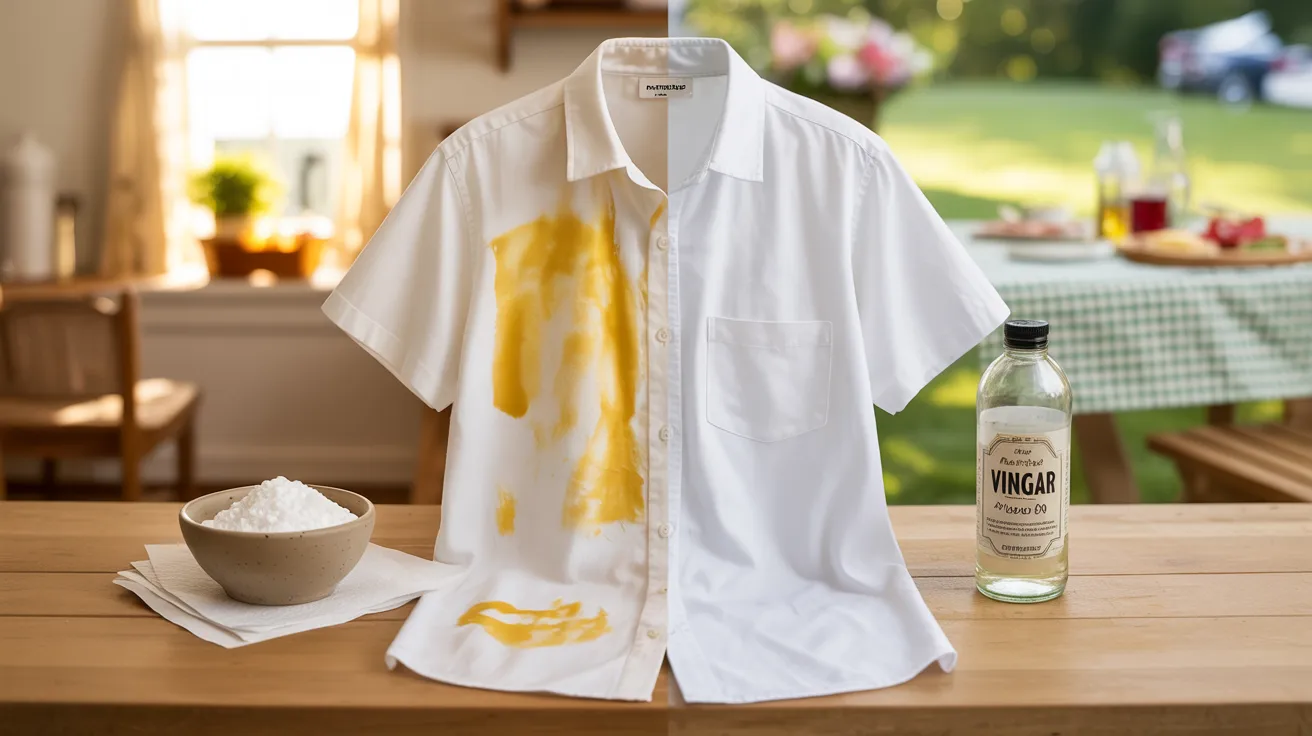
Mustard is not like most condiments. It contains turmeric, a deep yellow dye that bonds fast with fabric fibers the moment it makes contact.
The longer you wait, the deeper it sets. That's what makes it so frustrating.
Even if you act quickly, you're still dealing with a pigment that was built by nature to hold its color. It's not your fault.
You just need the right approach from the very start to have a real shot at full removal.
Immediate Steps Recommended by Community Users
When it comes to mustard stains, the first few minutes make all the difference.
Act Quickly
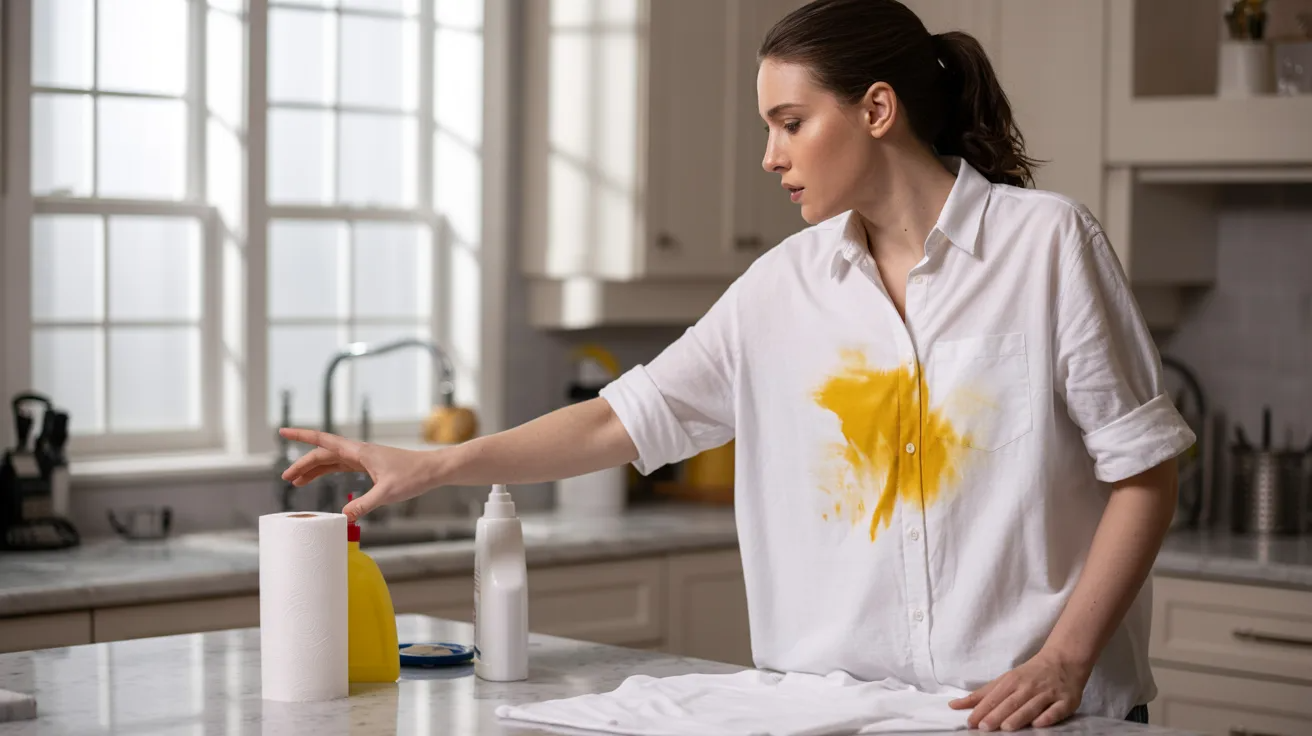
The second you spot the stain, stop what you're doing and treat it. Fresh mustard is still sitting on top of the fabric. It hasn't bonded yet.
That gives you a real shot at full removal. Every minute you wait makes the job harder. Speed is your biggest advantage when dealing with mustard.
Scrape Off Excess Mustard
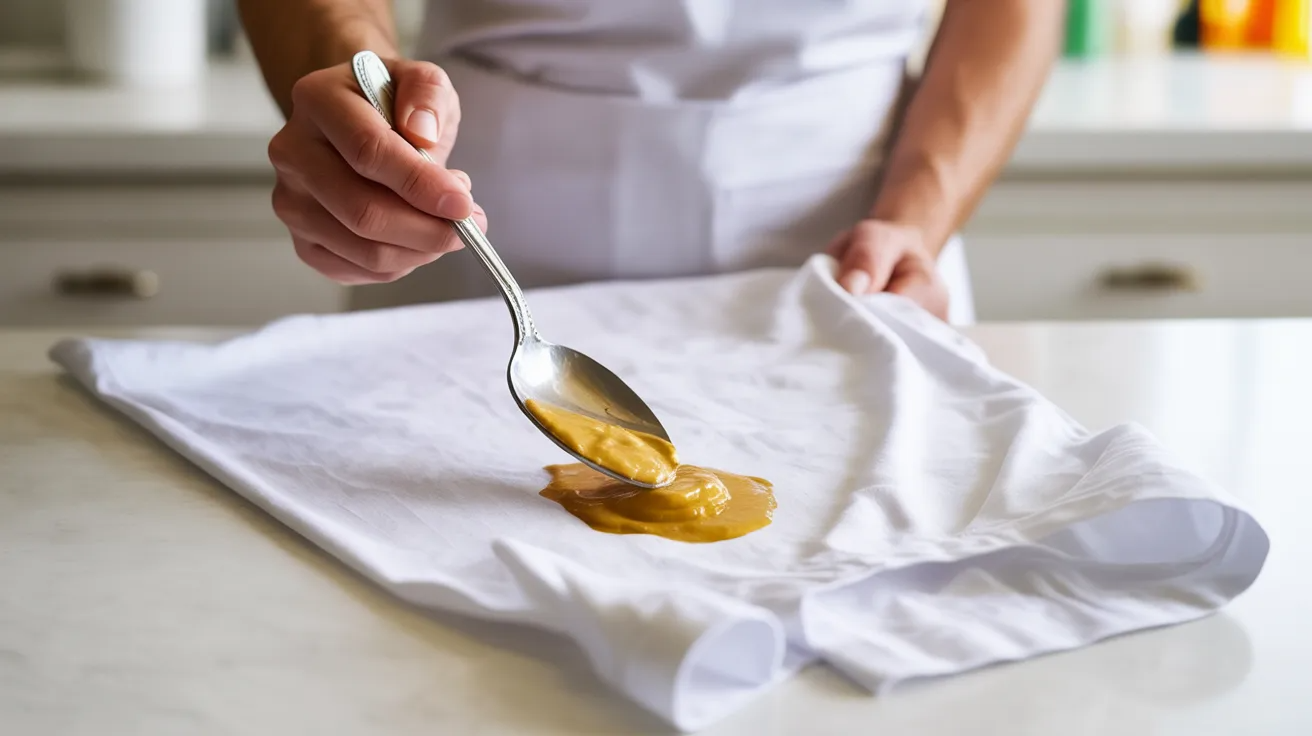
Before adding water or any cleaning product, scrape off the mustard sitting on the surface. Use a spoon or the dull side of a knife.
Work slowly from the outside edges toward the center. This stops you from pushing more mustard deeper into the fabric. Less mustard on top means a smaller, lighter stain underneath.
Blot, Don't Rub
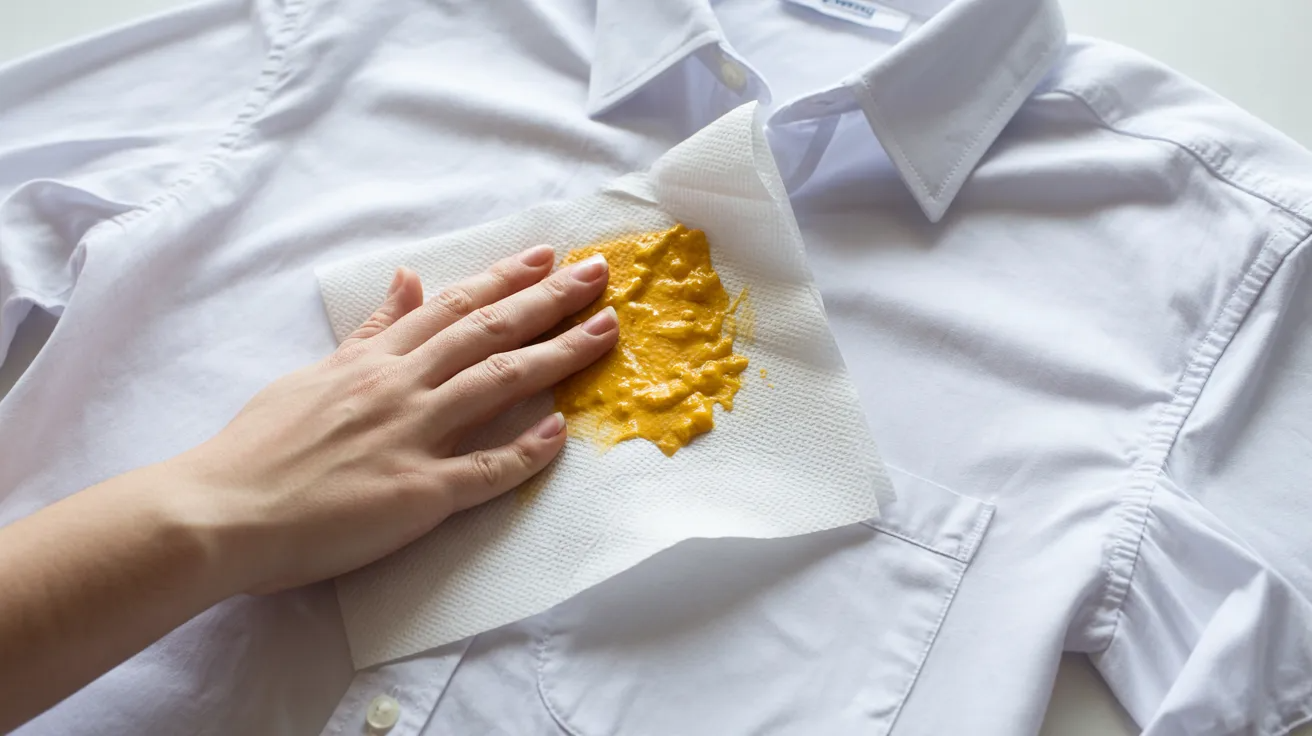
Rubbing feels like the right move. It's not. When you rub a mustard stain, you push the turmeric pigment across a wider area and deeper into the fibers.
Instead, press a clean cloth or paper towel gently onto the stain. Lift. Repeat. This pulls the stain up instead of spreading it around.
Rinse with Cold Water

Cold water is your best friend at this stage. If possible, flush it through the back of the stained area so the water pushes the pigment out rather than in.
Do not use warm or hot water yet. Heat sets the stain fast. Cold water keeps the pigment loose and easier to lift.
Avoid Heat or Drying

This is where most people go wrong. They rinse, think it looks better, and toss it in the dryer. Big mistake.
Heat permanently locks turmeric into fabric fibers. Always check the stain is fully gone before putting anything near heat. A stain that looks faint while wet can become permanent after one round in the dryer.
5 DIY Methods Shared in Community Forums
These community-tested DIY methods use simple ingredients to lift mustard stains from fabric fast and effectively.
1. Vinegar and Dish Soap Solution

Mix one part white vinegar with one part water. Add a few drops of dish soap. Apply the mix to the stain and let it sit for five to ten minutes.
The vinegar helps break down the turmeric pigment while the dish soap lifts it away from the fibers.
Rinse with cold water after and check the stain. Repeat if needed before moving to any other step.
2. Rubbing Alcohol Method
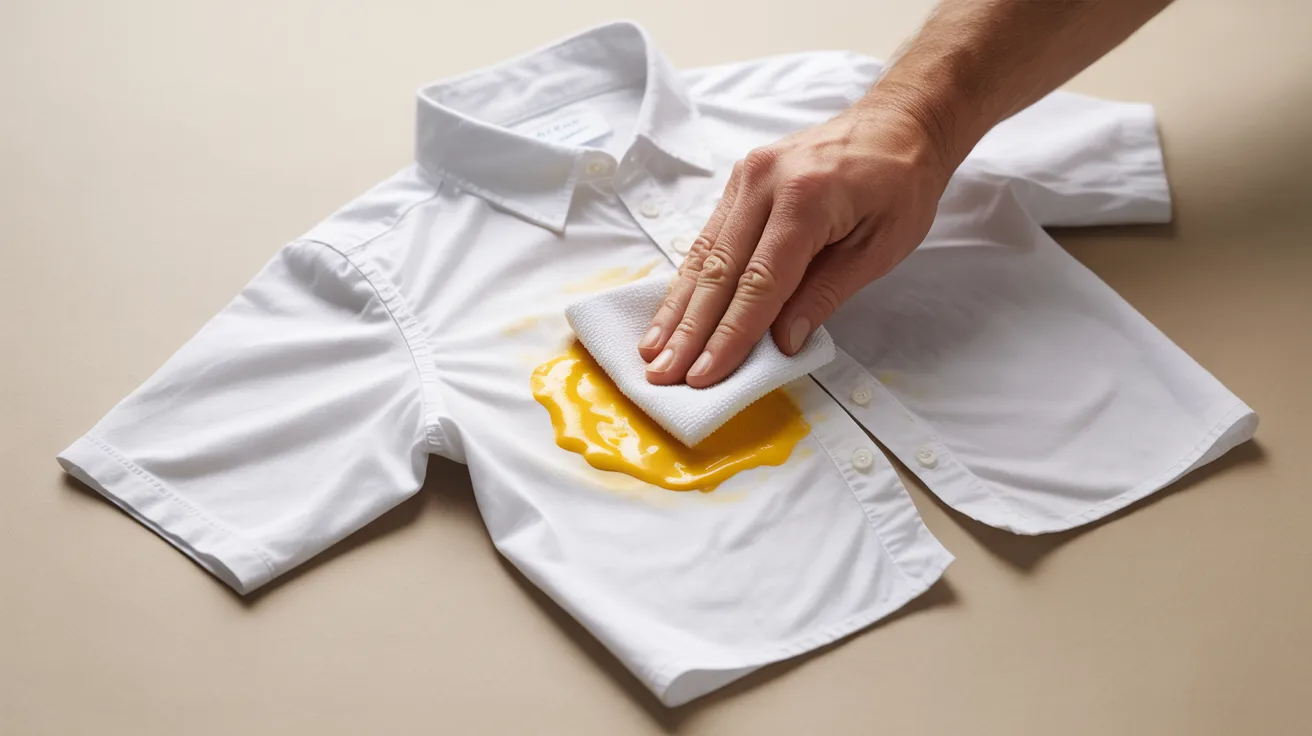
Rubbing alcohol works especially well on fresh mustard stains. Dab a small amount onto a clean cloth and press it gently onto the stain.
Let it sit for two to three minutes. The alcohol breaks down the turmeric at a chemical level, loosening its grip on the fabric.
Blot with a dry cloth after. Rinse with cold water. Many people in cleaning communities say this is their first choice.
3. Hydrogen Peroxide for Stubborn Stains
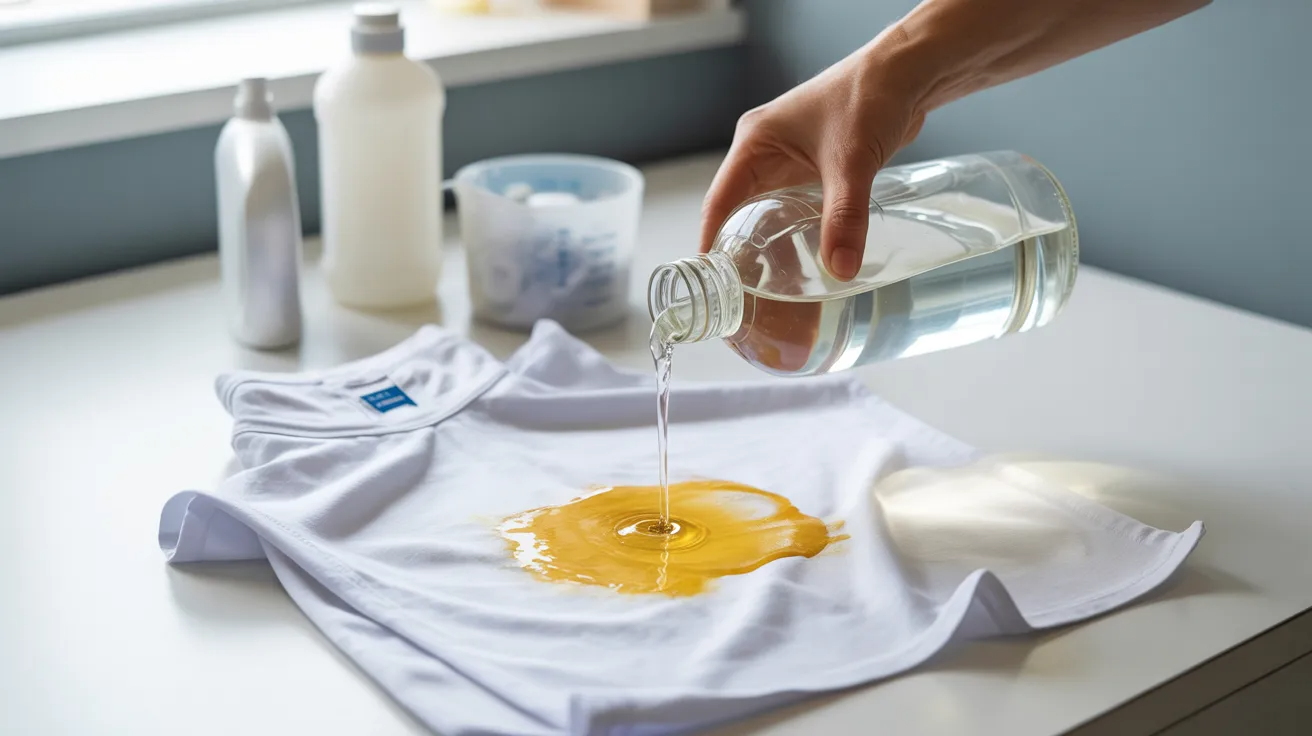
If the stain has already set after washing, hydrogen peroxide can help. Apply a small amount directly to the affected area. Let it sit for ten minutes.
It works by lightening the yellow pigment left behind. Rinse with cold water and check before drying.
Do not use this on dark or colored fabrics as it may cause discoloration.
4. Baking Soda Paste Method
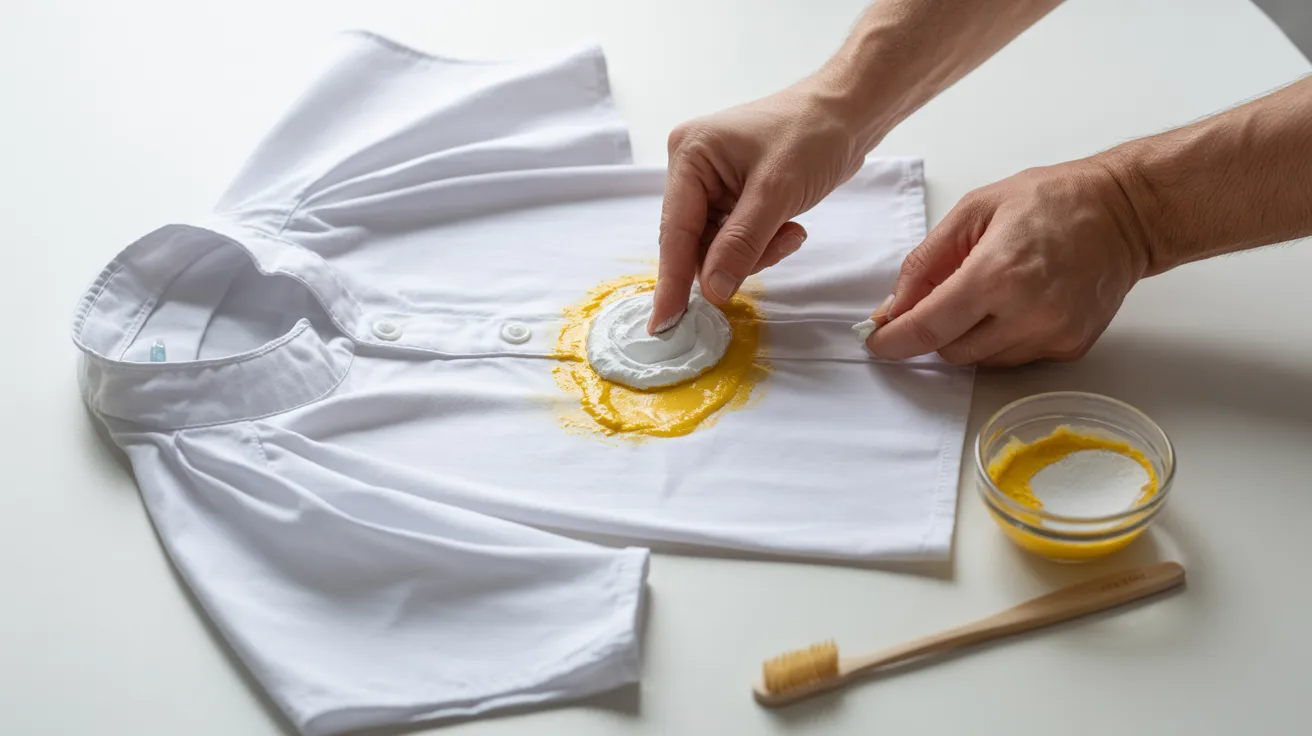
Mix baking soda with just enough water to form a thick paste. Spread it over the stain and rub gently in small circles.
Let it sit for fifteen minutes. The paste works to lift stain particles away from the fabric fibers. Rinse with cold water after.
This method works especially well on cotton and linen. It's simple, affordable, and most people already have everything they need at home.
5. Detergent Pre-Treatment Method
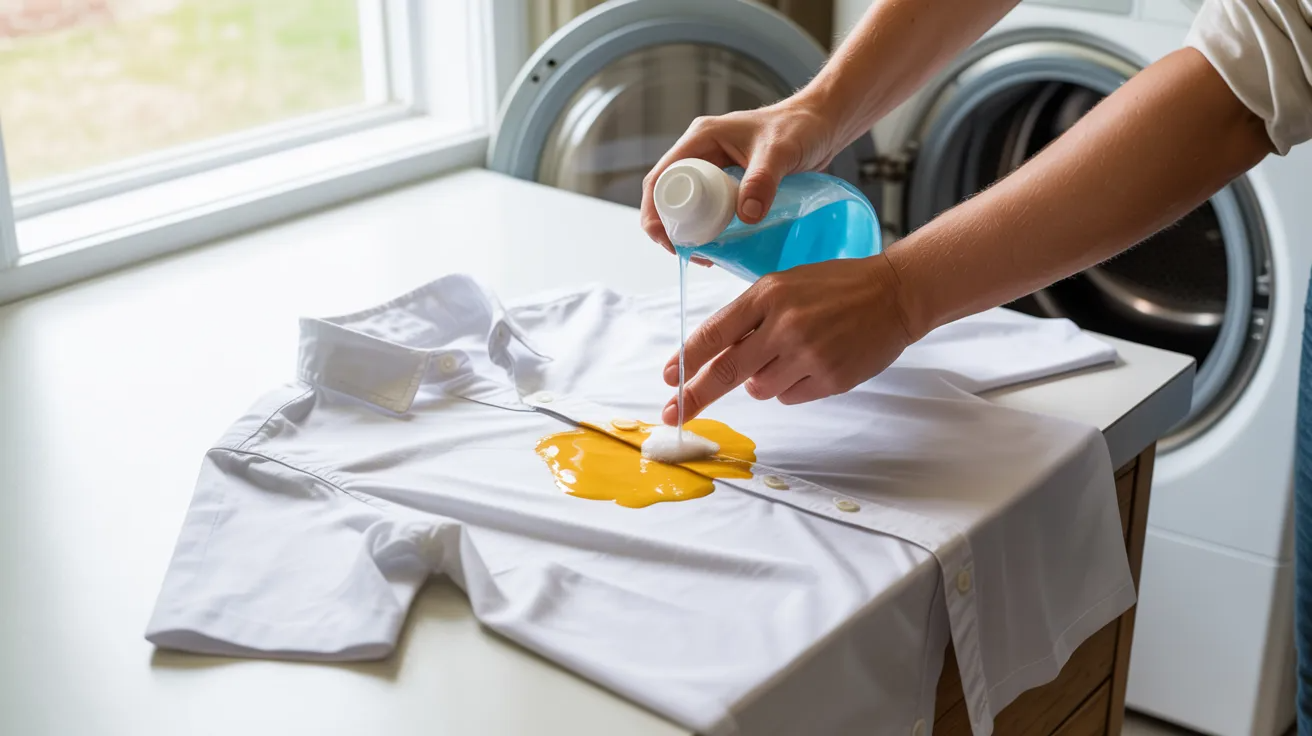
Apply liquid laundry detergent directly to the stain before washing. Rub it gently with your fingers. Let it sit for ten to fifteen minutes.
The detergent starts loosening the mustard pigment before the wash cycle even begins. Then run a normal cold wash.
This method works best when the detergent gets to sit on the stain rather than being diluted right away in the washing machine.
What to Avoid
Before you start treating the stain, know what not to do.
- Do not rub the stain. Rubbing spreads the turmeric pigment wider and makes the stain much harder to remove.
- Avoid heat before the stain is fully gone. Hot water and dryers can permanently set mustard into the fabric.
- Do not use ammonia on mustard stains. It can react badly with turmeric and make the stain worse, not better.
- Do not let the stain dry before treating it. A dried mustard stain is far more stubborn than one you catch fresh.
- Avoid soaking the whole garment first. Focus directly on the stained area before anything else.
Getting any of these steps wrong can turn a simple stain into a permanent one.
Conclusion
I've dealt with more than a few mustard stains over the years, and I know how frustrating it can feel.
But here's what I've learned:the right steps make all the difference. You don't need expensive products.
You just need to act fast and use what's already in your home.I hope this guide on how to remove mustard stains helped you find a fix that works.
Try one method and see how it goes.
Got a tip that worked for you? Drop it in the comments below. I'd love to hear what worked.
Frequently Asked Questions
Does mustard come out of clothes easily?
It depends on how fast you treat it. Fresh stains are much easier to remove than dried or set-in ones.
Can I use bleach to remove mustard stains?
Avoid bleach on colored fabrics. It can strip the color right along with the stain.
What if the mustard stain dried before I noticed it?
Soak the area in cold water first, then apply a treatment like hydrogen peroxide or baking soda paste.
Does vinegar really work on mustard stains?
Yes. White vinegar helps break down the turmeric in mustard and works well when paired with dish soap.
Can I put the item in the dryer after treating the stain?
Only if the stain is completely gone. Heat will permanently lock any remaining mustard pigment into the fabric.