
I ruined my quartz countertops within the first month of having them. Not from neglect. From cleaning them wrong. I used the wrong products, thinking I was doing the right thing.
The surface went dull fast. That mistake pushed me to actually research how to clean quartz countertops the proper way. What I found surprised me.
Most common cleaning habits actually cause slow, invisible damage over time. In this guide, I am sharing everything I learned so you do not have to figure it out the hard way.
What Makes Quartz Countertops Special?
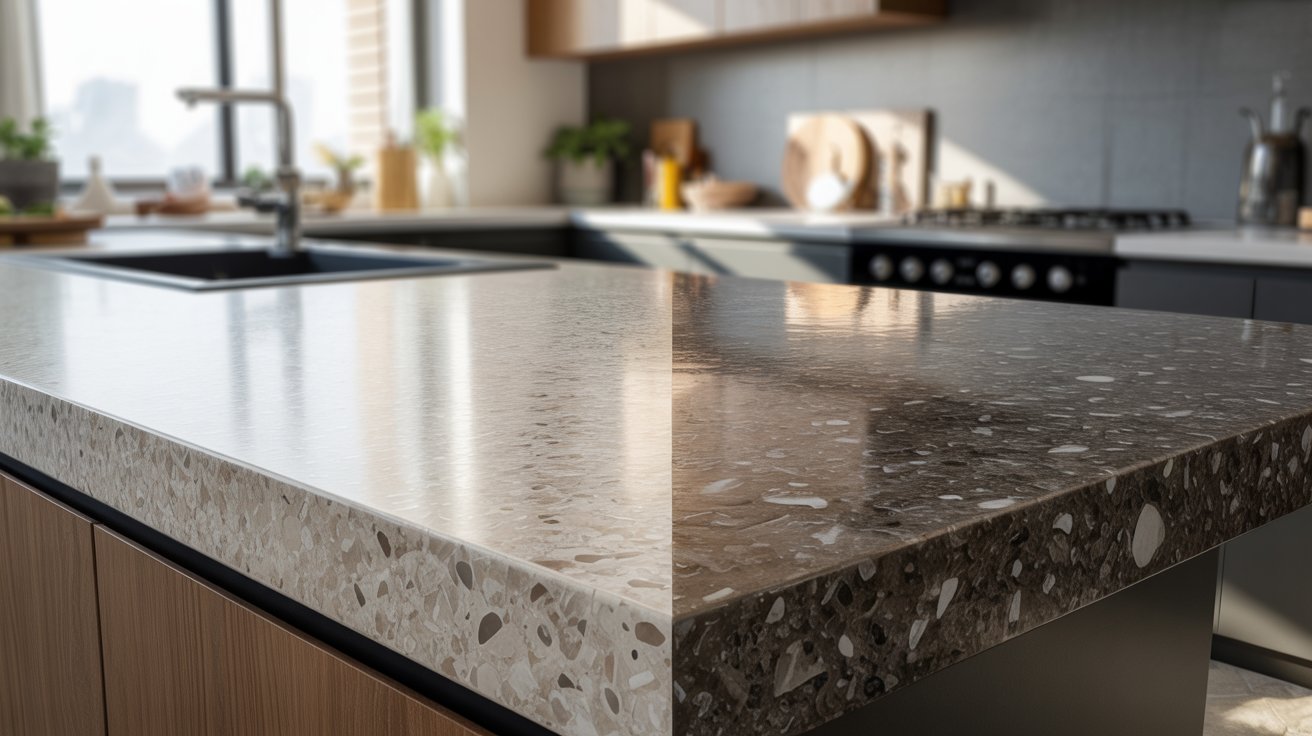
non-porous finish, and contrast between well-maintained and slightly damaged areas"
Quartz is not a natural stone. It is an engineered material made from crushed quartz crystals mixed with resin. That resin is what makes it non-porous.
Because it is non-porous, quartz does not absorb liquids the way granite or marble does. That means bacteria and stains have a harder time getting in. It is genuinely easier to maintain day to day.
But here is where people go wrong. Many assume non-porous means maintenance-free. It does not. The resin surface can still get dull, stained, or scratched if you are not careful.
Quartz is also more consistent in color and pattern than natural stone. That is because it is made in a controlled process. What you see in the showroom is what you get at home.
Daily Cleaning Routine for Quartz Countertops
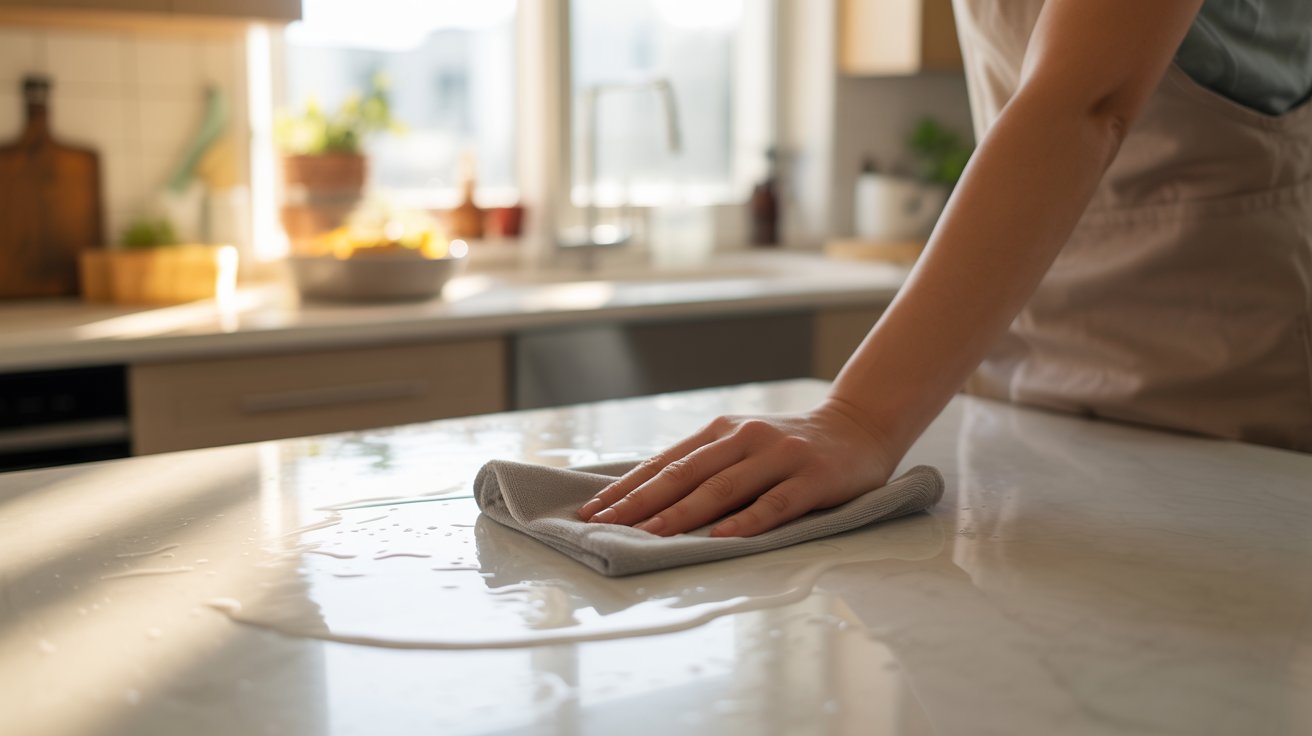
A daily routine does not have to be complicated. All you need is warm water and a small drop of mild dish soap. That combo handles most messes without any fuss.
Always use a soft microfiber cloth. Rough sponges or scrubbing pads can leave tiny scratches over time. Those scratches add up and make the surface look dull.
After wiping, dry the surface with a clean cloth. Leaving water to air dry often leaves streaks or mineral spots behind. A quick dry takes five seconds and saves you a lot of headache.
For most kitchens, a daily wipe-down is enough. A deeper clean once a week keeps things in top shape without much extra effort.
Step-by-Step Guide on How to Clean Quartz Countertops Properly

Getting the process right is not about using fancy products. It is about doing the simple steps in the right order. Here is exactly how I do it at home.
- Clear the surface of any dishes, crumbs, or loose debris first
- Mix a few drops of mild dish soap into warm water
- Dip your microfiber cloth into the solution and wring it out well
- Wipe the entire surface using gentle, circular motions
- Rinse the cloth with clean water and go over the surface again
- Dry with a separate clean cloth right away
The key is to be consistent. Doing this every day takes less than two minutes. And it keeps buildup from forming in the first place. You do not need to scrub hard. Gentle and steady is what works best with quartz.
How to Clean Quartz Countertop Stains Without Damage
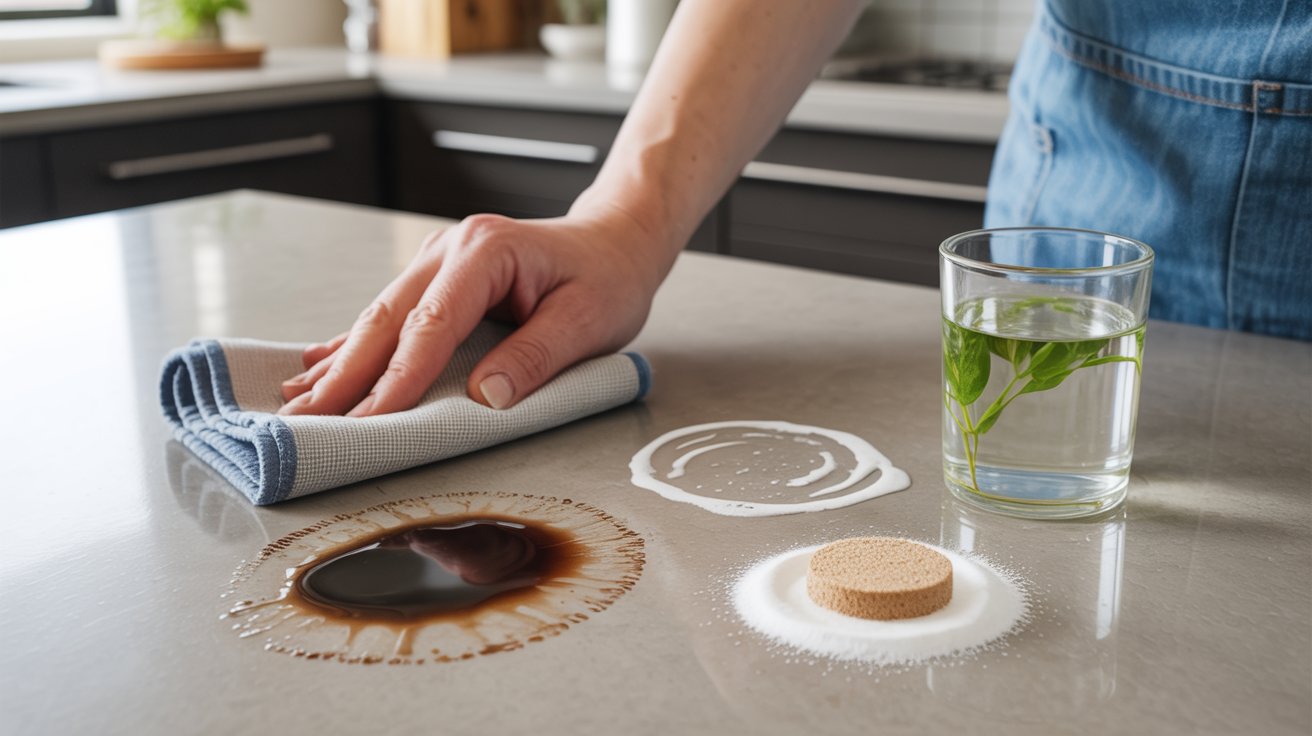
Stains happen. The trick is knowing how to handle each one without making things worse. Harsh scrubbing or strong chemicals can cause more damage than the stain itself.
Here is how to deal with common stains safely:
- Coffee, wine, or turmeric: Wipe immediately. If it has dried, use a damp cloth with a little dish soap and let it sit for a minute before wiping
- Grease or oil buildup: A degreasing dish soap works well here. Apply, let it sit briefly, then wipe clean
- Hard water spots: Dampen a cloth with a small amount of diluted white vinegar. Wipe gently and rinse well
- Ink or dye marks: Use a tiny amount of rubbing alcohol on a cotton pad. Rub lightly and rinse immediately
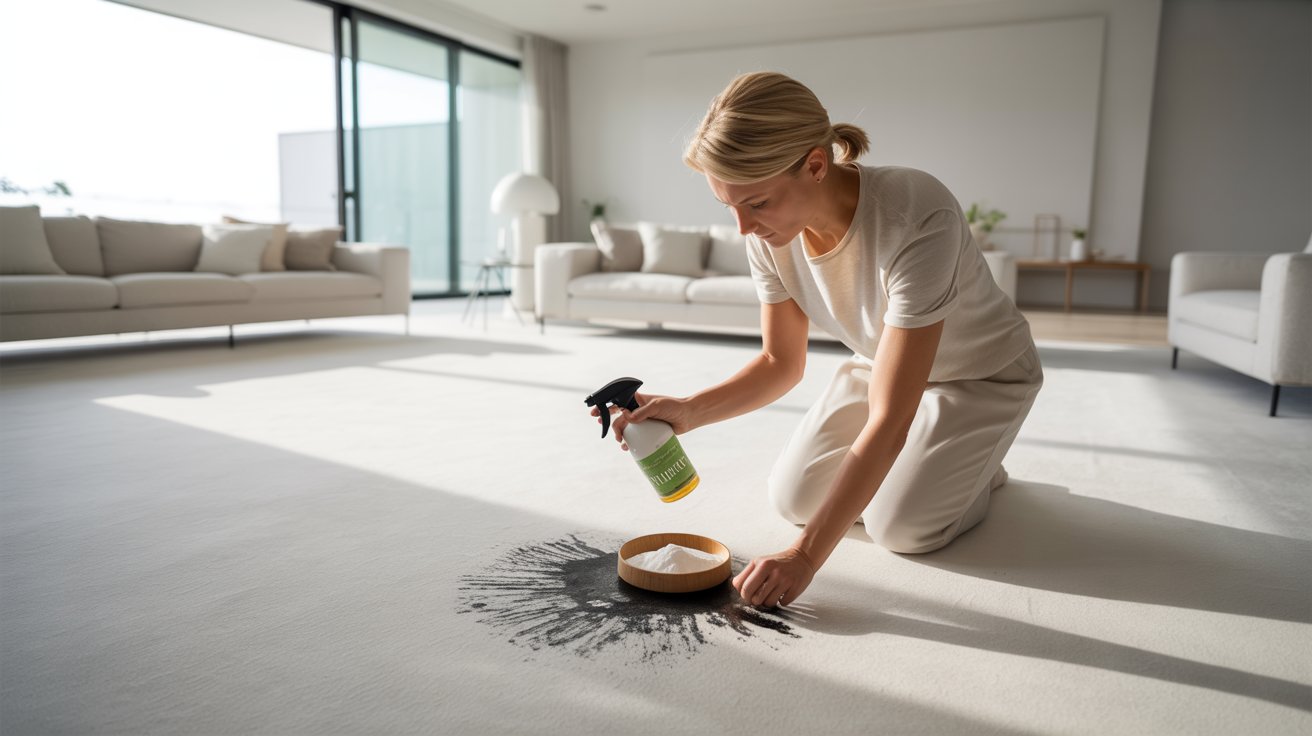
For stubborn spots that will not budge, mix a small amount of baking soda with water to form a thick paste. Apply it to the stain, let it sit for a few minutes, then gently wipe it off with a soft cloth. Do not scrub. Let the paste do the work.
Always rinse the area after treating a stain. Leaving any cleaning agent on the surface, even a gentle one, can cause residue buildup over time.
What Cleaners Are Safe for Quartz?
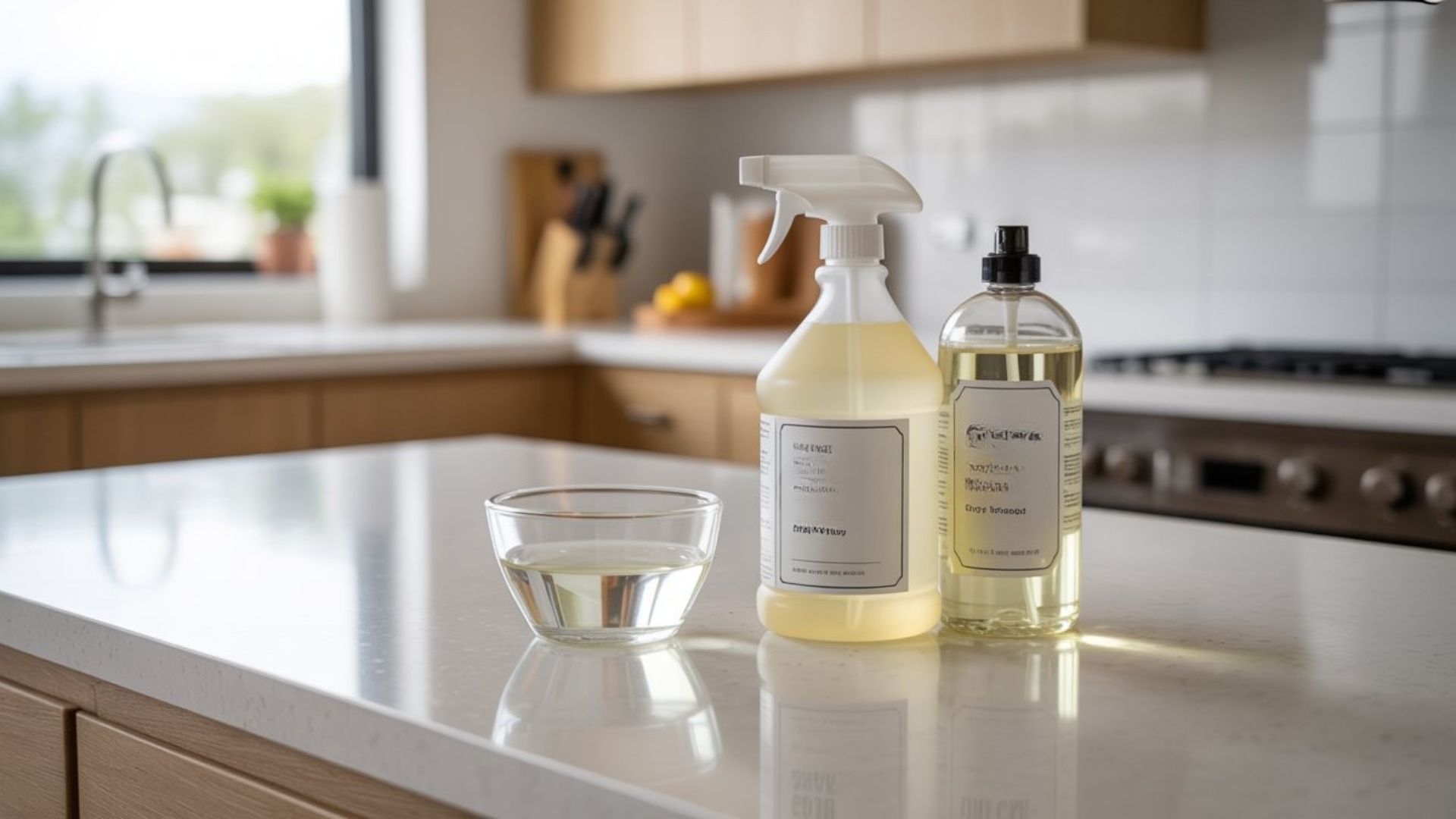
Not all cleaners are created equal. The safest ones for quartz are pH-neutral. That means they are neither too acidic nor too alkaline. These are gentle on the resin without stripping it.
Mild dish soap is honestly one of the best options out there. It is affordable, widely available, and effective for everyday messes. A little goes a long way.
There are also quartz-safe commercial sprays on the market. Look for ones that are labeled specifically for engineered stone. Avoid anything with bleach or ammonia listed in the ingredients.
As for natural options, diluted white vinegar can work for hard water spots. But use it sparingly. Too much, too often can dull the surface over time.
What to Avoid When Cleaning Quartz Countertops
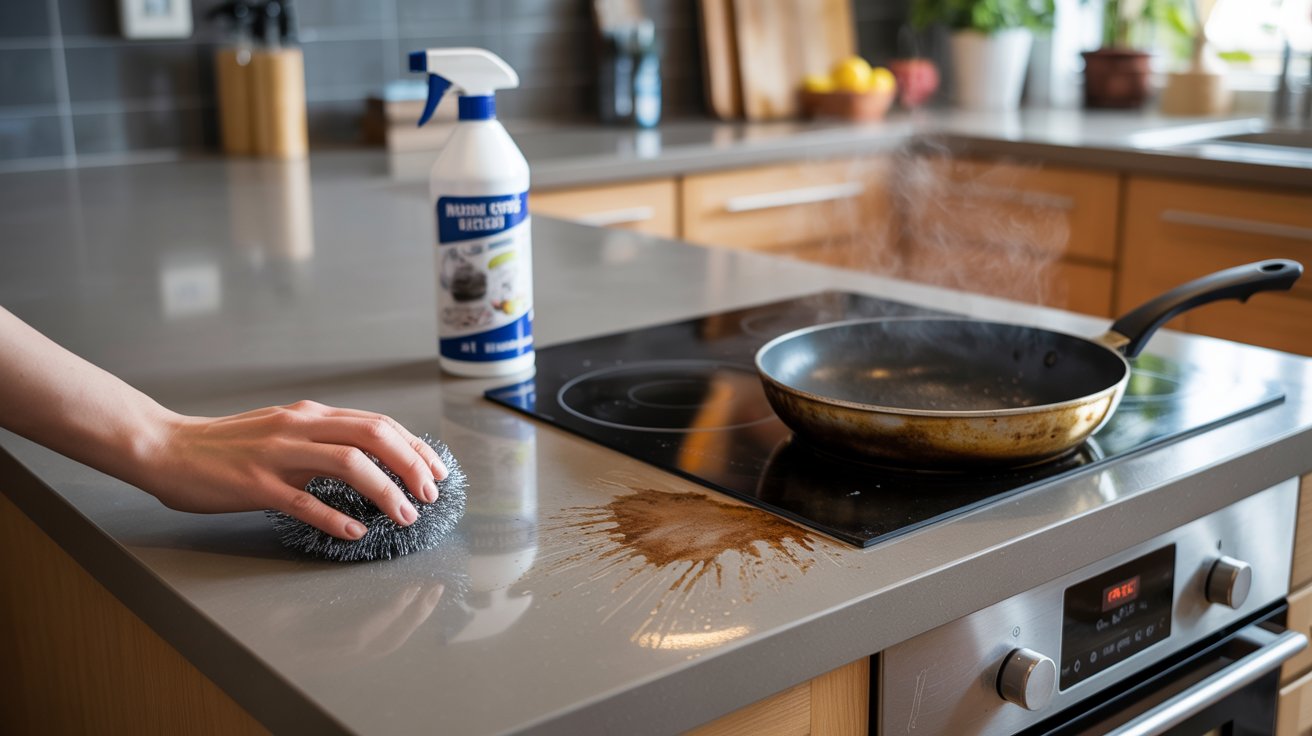
Some cleaning habits that work on other surfaces will seriously damage quartz. Bleach is one of them. Using it regularly breaks down the resin binder and leads to discoloration.
Ammonia-based cleaners are also off the list. They are found in many glass and multi-surface sprays. Always check the label before you spray anything on your quartz.
Steel wool, rough sponges, and abrasive scrubbing pads are a hard no. They leave micro-scratches across the surface. Over time, those scratches make the countertop look cloudy and worn.
Heat is another risk people overlook. Placing a hot pan directly on quartz can crack or discolor the surface. Always use a trivet or a folded towel underneath hot cookware.
Strong acidic cleaners, like undiluted vinegar or lemon juice, can slowly erode the surface if used regularly. The damage is gradual but it builds up. Stick to gentle options and your countertops will thank you.
How to Maintain Quartz Countertops for Long-Term Durability
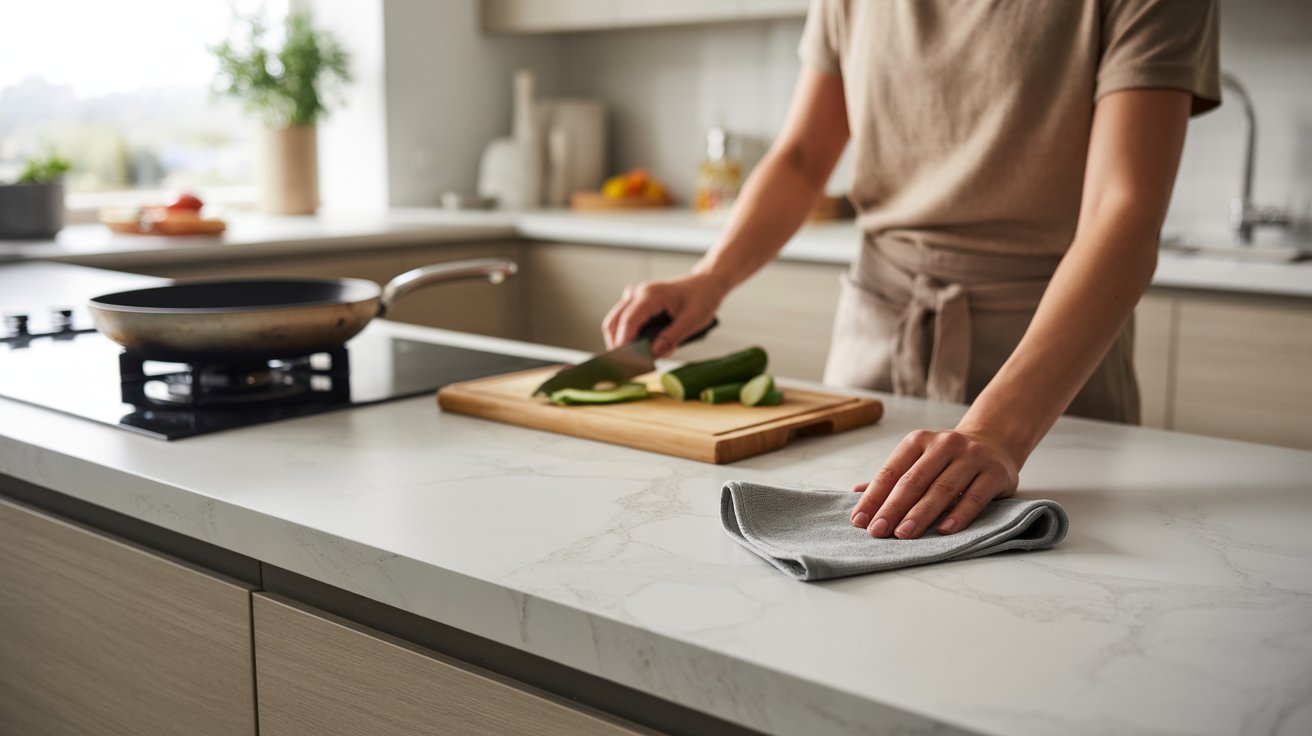
Good maintenance is mostly about building small, consistent habits. Use a cutting board every time you chop something. Quartz is scratch-resistant, not scratch-proof. There is a difference.
Here is a simple routine checklist to keep things on track:
- Daily: wipe down with soapy water, dry thoroughly
- Weekly: deeper clean with a quartz-safe cleaner
- Monthly: check for any dullness or spots and treat them early
- Always: use trivets, cutting boards, and clean up spills right away
Staying consistent with these habits means you will rarely deal with serious issues. Prevention is always easier than fixing damage.
Common Mistakes People Make (And How to Fix Them)
Most quartz problems come from a few repeated mistakes. The good news is they are all easy to fix once you know what to look for.
Here are the most common ones I have seen:
- Using too much cleaner: More soap does not mean cleaner counters. Excess soap leaves a filmy residue that attracts more dirt. Fix it by using just a few drops and rinsing well
- Scrubbing too hard: Hard scrubbing wears down the surface finish over time. Switch to a soft microfiber cloth and use light pressure
- Ignoring spills: Letting spills sit, even for a few hours, increases the chance of staining. Wipe them up right away, every time
- Using the wrong products: Bleach sprays, rough pads, and acidic cleaners all cause slow, cumulative damage. Stick to gentle, pH-neutral options
These fixes are simple. None of them require extra time or money. Just a small shift in your cleaning habits makes a real difference over the long run.
Conclusion
Quartz countertops are an investment worth protecting. And honestly, keeping them in great shape is not hard once you know what you are doing. The real secret is consistency, not effort.
I started small, stayed regular, and the results speak for themselves. Now I want to hear from you. Do you have a cleaning trick that works like a charm? Or a stain you just cannot figure out?
Drop your questions or tips in the comments below. And if this guide helped you, share it with someone who could use it.
Frequently Asked Questions
Can I Use Vinegar to Clean Quartz Countertops?
Yes, but only when it is well diluted and used occasionally. Regular use of vinegar can slowly dull the surface over time.
How Do I Remove Tough Stains From Quartz Countertops?
Make a paste with baking soda and water, apply it to the stain, and gently wipe it off with a soft cloth. Avoid scrubbing hard, as that can scratch the surface.
What Is the Best Cleaner for Quartz Countertops?
A mild dish soap mixed with warm water is one of the safest and most effective options. pH-neutral commercial cleaners made for engineered stone also work well.
Can Quartz Countertops Get Damaged From Cleaning?
Yes, using harsh chemicals, bleach, ammonia, or abrasive scrubbers can cause real damage over time. Always choose gentle, quartz-safe products.
How Often Should I Clean Quartz Countertops?
A quick wipe-down every day is ideal for routine maintenance. A more thorough clean once a week keeps the surface in great condition long term.