

For years, I poured detergent straight from the bottle without measuring once. My clothes were clean enough, so I never questioned it.
Then I noticed my dark shirts were developing a grey film and my washing machine had a smell I could not get rid of.
Turns out, knowing how much laundry detergent to use is the one thing most people get wrong without ever realizing it.
And the fix is not complicated at all. But what surprised me most was how little detergent you actually need.
Keep reading and you will see exactly what I mean.
Why Using the Right Amount of Laundry Detergent Matters
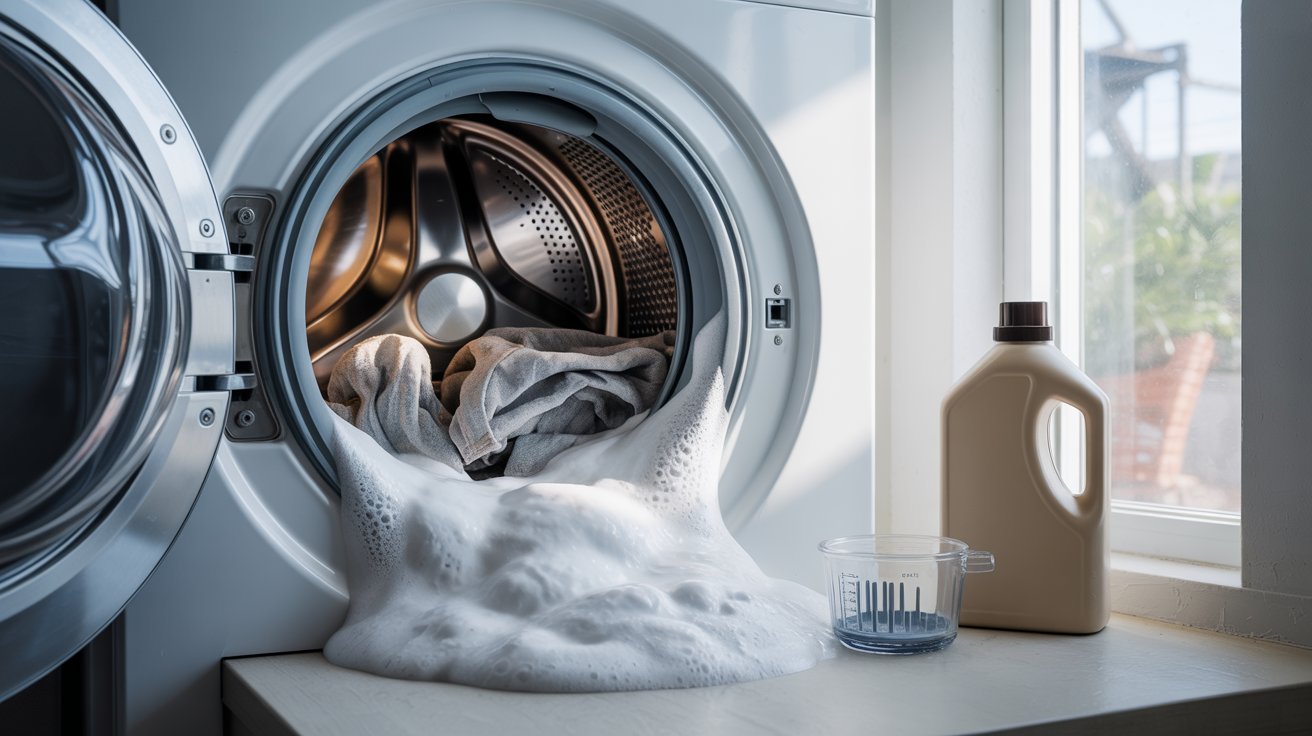
Too much detergent leaves a sticky residue on fabric that does not fully rinse out. Over time, that buildup makes clothes feel stiff and traps bacteria, which is often why clean laundry still smells off after washing.
Using the correct amount also saves money in a very direct way. A single bottle lasts twice as long when you stop overdosing every load. That adds up across a year faster than most people expect.
Your washing machine benefits too. Excess detergent creates foam buildup inside the drum and pipes. This reduces the machine’s efficiency and can lead to maintenance issues that cost far more than a bottle of detergent.
Skin sensitivity is another factor worth considering. Leftover detergent in fabric can irritate skin, especially for people prone to eczema or allergies. Getting the dose right protects both your clothes and the person wearing them.
How Much Laundry Detergent to Use (Quick Answer)
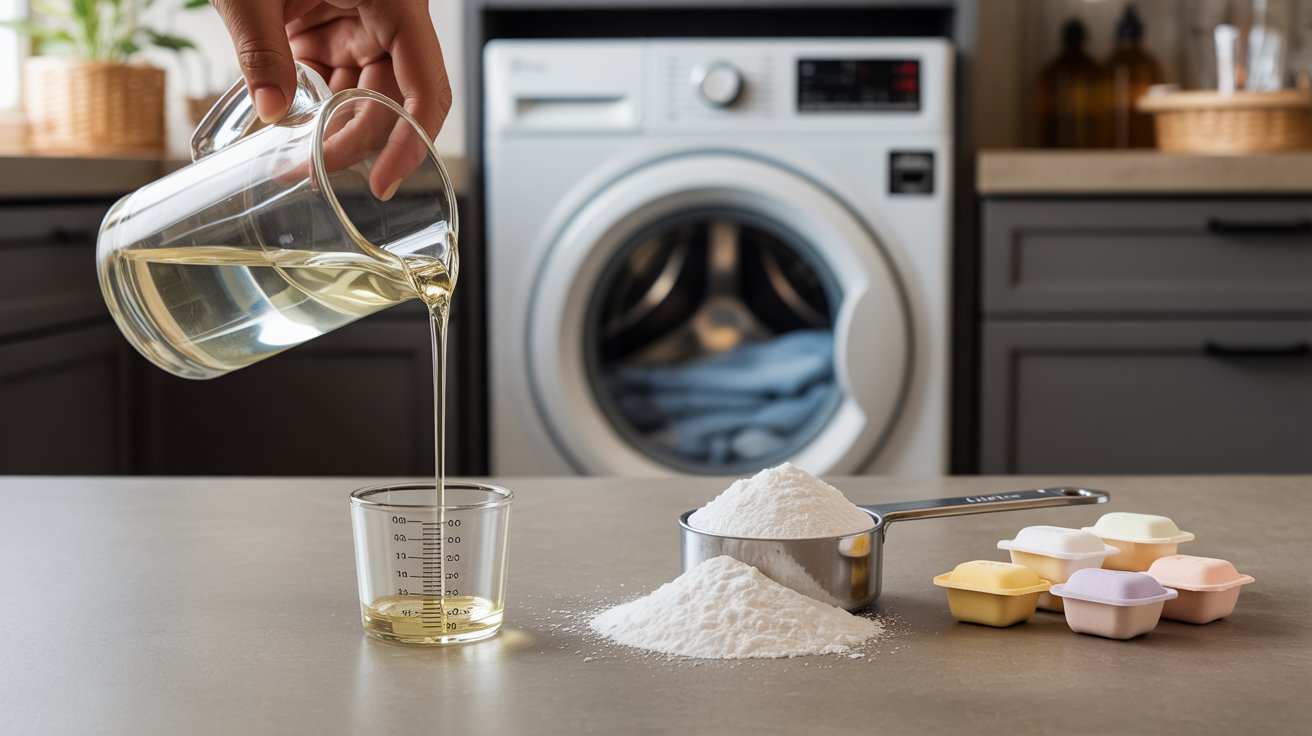
For a standard medium load with average soil levels, most liquid detergents require about two tablespoons. Powder detergents typically need around a quarter cup. Pods are pre-measured for a single standard load and usually need no adjustment.
These numbers shift based on load size, water type, and machine model. Treat these figures as a starting point, not a fixed rule for every situation.
The most common mistake people make is filling the measuring cap to the top. Most caps are designed to hold far more than a single load actually needs. Reading the fill lines on the cap matters more than it seems.
Factors That Affect How Much Laundry Detergent You Need
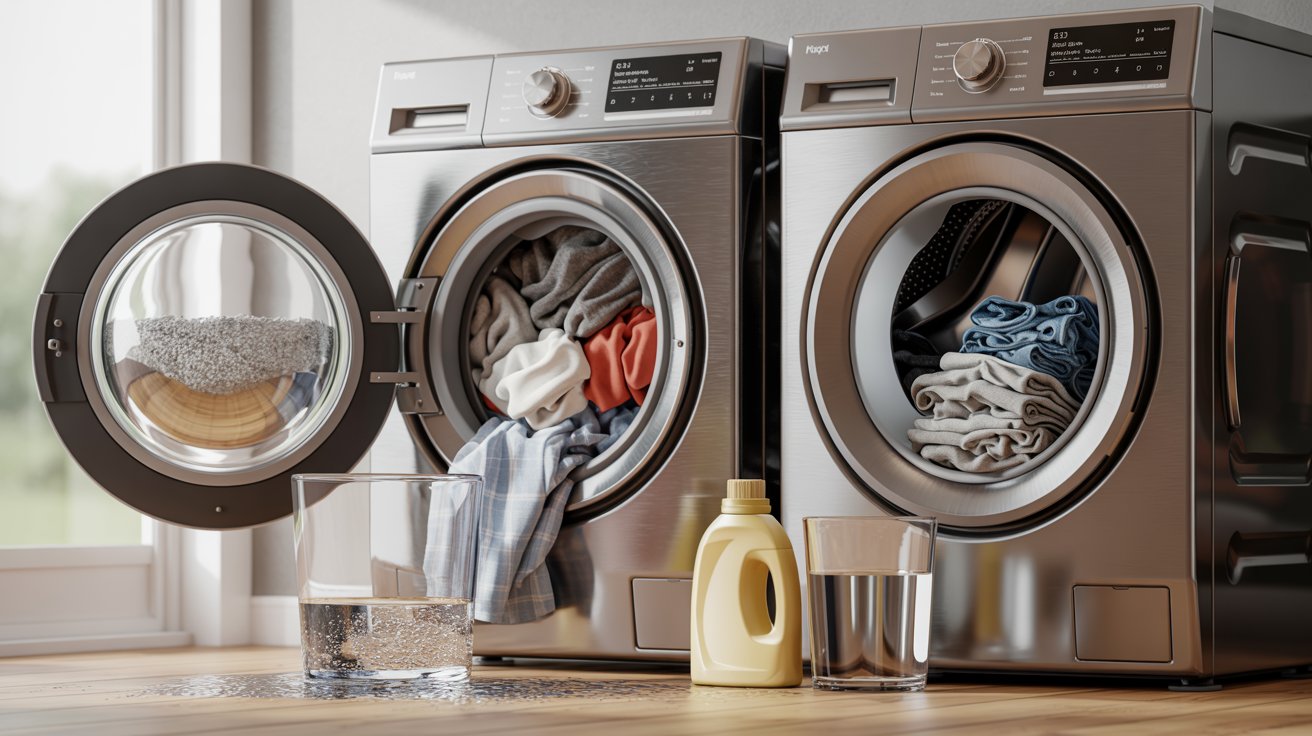
The right amount is not the same for every household or every load. Several variables change the equation significantly, and ignoring them leads to either wasted detergent or poorly cleaned clothes.
Here is what actually makes a difference:
- Load size is the most obvious factor. A small load needs noticeably less detergent than a full drum, and using a full dose on a half load leaves more residue behind
- Dirt level matters just as much. Lightly worn clothes like sleepwear need far less detergent than heavily soiled gym clothes or workwear with grease stains
- Water hardness affects how well detergent lathers and rinses. Hard water requires a slightly higher dose because the minerals reduce the detergent’s cleaning effectiveness
- Machine type is critical. High-efficiency machines use less water and therefore need significantly less detergent than standard top-load machines
Once you factor in these four variables, figuring out how much laundry detergent to use for your specific setup becomes much more straightforward.
Detergent Dosage by Washing Machine Type
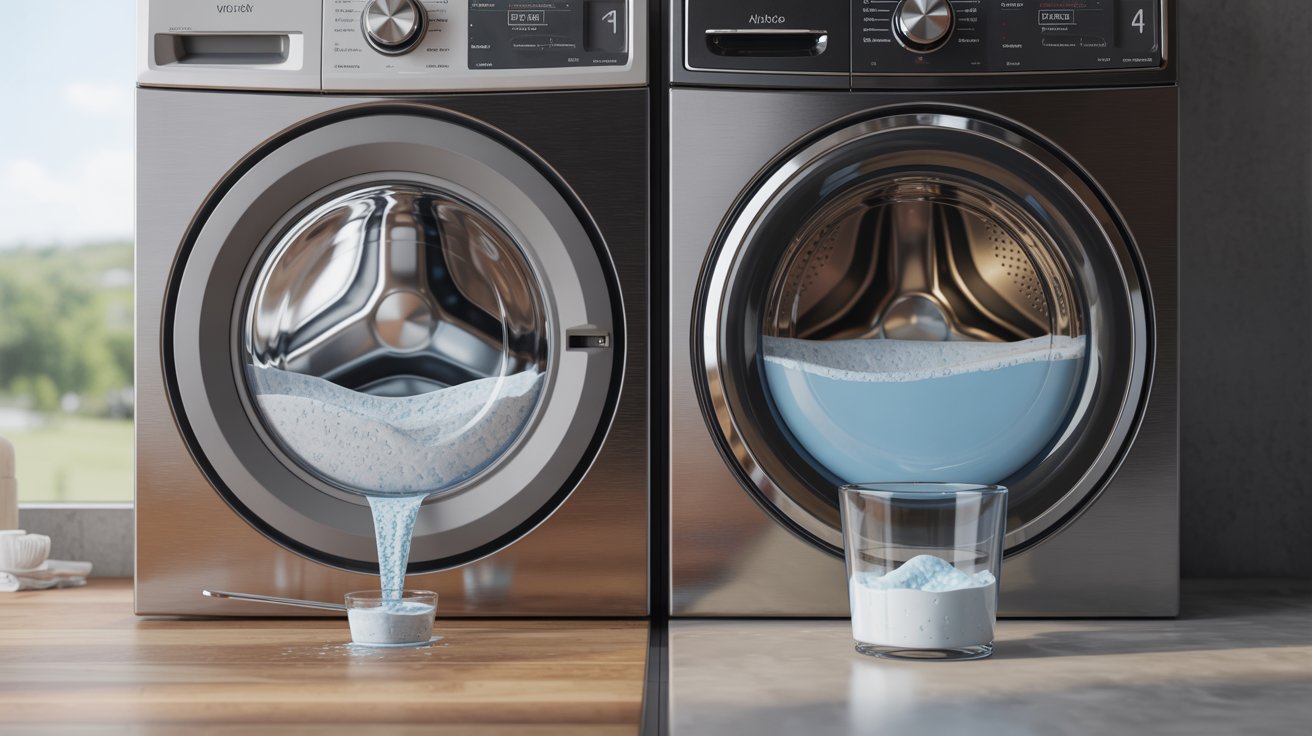
Not all washing machines work the same way. The type of machine you own directly affects how much detergent is appropriate per load, and using the wrong amount for your machine is one of the most common laundry mistakes made at home.
High-Efficiency (HE) Washing Machines
HE machines use significantly less water than traditional washers. Less water means the detergent is more concentrated during the wash cycle, so you need less of it to get the same result.
For most HE machines, the recommended liquid detergent dose is around one to two tablespoons per load. Always look for detergents labeled HE compatible, as regular detergents produce too much foam for these machines.
Using standard detergent amounts in an HE washer does not clean better. It actually creates excess suds that the machine cannot fully rinse, leaving residue on clothes and inside the drum over time.
Top-Load Washing Machines
Top-load washers use more water than HE models, which means they can handle a slightly higher detergent dose. A standard liquid dose sits around three to four tablespoons for a full load.
For older top-load machines with larger drums, you may need to adjust upward for heavily soiled loads. But even here, the fill line on the measuring cap is usually set higher than necessary.
Start at the lower end of the recommended range and increase only if clothes are not coming out clean. Most households find that less than the suggested maximum works perfectly well for everyday loads.
Liquid vs Powder vs Pods – How Much to Use
Each detergent format has its own measurement rules, and treating them all the same is where a lot of people go wrong.
|
Detergent Type |
Standard Load |
Large Load |
Heavily Soiled |
|
Liquid |
2 tbsp |
3 tbsp |
Up to 4 tbsp |
|
Powder |
¼ cup |
⅓ cup |
Up to ½ cup |
|
Pods |
1 pod |
1 pod |
2 pods |
Liquid detergent gives you the most control since you can measure precisely with the cap. Always use the fill lines printed inside the cap rather than eyeballing it.
Powder detergent is easy to over-measure because the scoop feels generous. Level off the scoop rather than packing it for a more accurate dose.
Pods are the most straightforward since one pod handles a standard load. You only need a second pod for extra-large or heavily soiled loads. Never break open a pod to use a partial amount as this throws off the formula balance.
Signs You Are Using Too Much or Too Little Detergent
Your laundry will tell you when something is off. You just need to know what to look for. Both overuse and underuse leave visible signs that are easy to spot once you are aware of them.
Too much detergent:
- Clothes feel stiff or slightly tacky after drying
- White or grey residue visible on dark fabrics
- Washing machine smells sour or musty between washes
- Excessive foam visible through the machine door during a cycle
Too little detergent:
- Stains are still visible after a full wash cycle
- Clothes look dull or dingy after repeated washes
- Fabrics have a faint body odor even after washing
If you recognize either pattern, the fix is simple. Adjust your dose up or down by a small amount and run a test load. For residue buildup from overuse, run a hot empty cycle with no detergent to flush the machine clean before adjusting going forward.
Expert Tips to Use Laundry Detergent Efficiently
Small habits make a genuine difference in how well your laundry routine works over time. These are adjustments I made myself after years of overdosing and wondering why results were inconsistent.
Here is what actually works:
- Read the label every time you buy a new detergent. Formulas vary between brands and concentrations, and the same cap measurement does not apply to every product
- Use the measuring tools that come with the detergent rather than estimating. Caps and scoops have fill lines for a reason
- Pre-treat stains before loading the machine instead of adding extra detergent to compensate. A targeted stain remover does a far better job than doubling the dose
- Match your wash cycle to the load. A quick cycle needs less detergent than a heavy-duty cycle since the rinse time is shorter
Building these small habits into your routine means you figure out how much laundry detergent to use for each load almost automatically after a while.
Conclusion
Most people never question their detergent habits until something goes wrong. A ruined shirt, a smelly machine, or a monthly detergent bill that feels higher than it should.
Now you know exactly what to look for and how to fix it. Start with your very next load. Make one adjustment and see what changes. Then come back and tell me in the comments how it went. I read every response.
And if someone you know is still pouring detergent by guesswork, share this with them today.
Frequently Asked Questions
How Much Laundry Detergent Should I Use for One Load?
For a standard medium load, around two tablespoons of liquid detergent or a quarter cup of powder is a reliable starting point. Always check the fill lines on your measuring cap for the most accurate guidance.
Can I Use More Detergent for Heavily Soiled Clothes?
You can increase the dose slightly for heavily soiled loads, but doubling it rarely improves results. Pre-treating stains directly before washing is far more effective than adding extra detergent to the drum.
What Happens If I Use Too Much Detergent?
Excess detergent leaves residue on fabrics, makes clothes feel stiff, and builds up inside your washing machine over time. It can also trap odor in the fabric rather than removing it during the wash cycle.
Do HE Washers Need Special Detergent Amounts?
Yes, HE machines use less water so they need a noticeably smaller dose, usually one to two tablespoons of liquid detergent per load. Using regular amounts in an HE washer creates excess suds that the machine cannot properly rinse out.
Can Laundry Detergent Be Used for Slime?
Yes, small and controlled amounts of liquid laundry detergent are commonly used in DIY slime recipes as an activator. The quantity used is minimal and serves a very different purpose than cleaning fabric.