

I almost bought the wrong vanity for my bathroom. It looked perfect online. The style was right, the price was right. But I never checked the depth.
That one number would have made the whole bathroom unusable.
Most people do not realize how deep are bathroom vanities until something goes wrong. And by then, the vanity is already sitting in the room.
In this guide, I am covering everything you need to know before you buy, so you make the right call the first time.
What Is the Standard Depth of Bathroom Vanities?
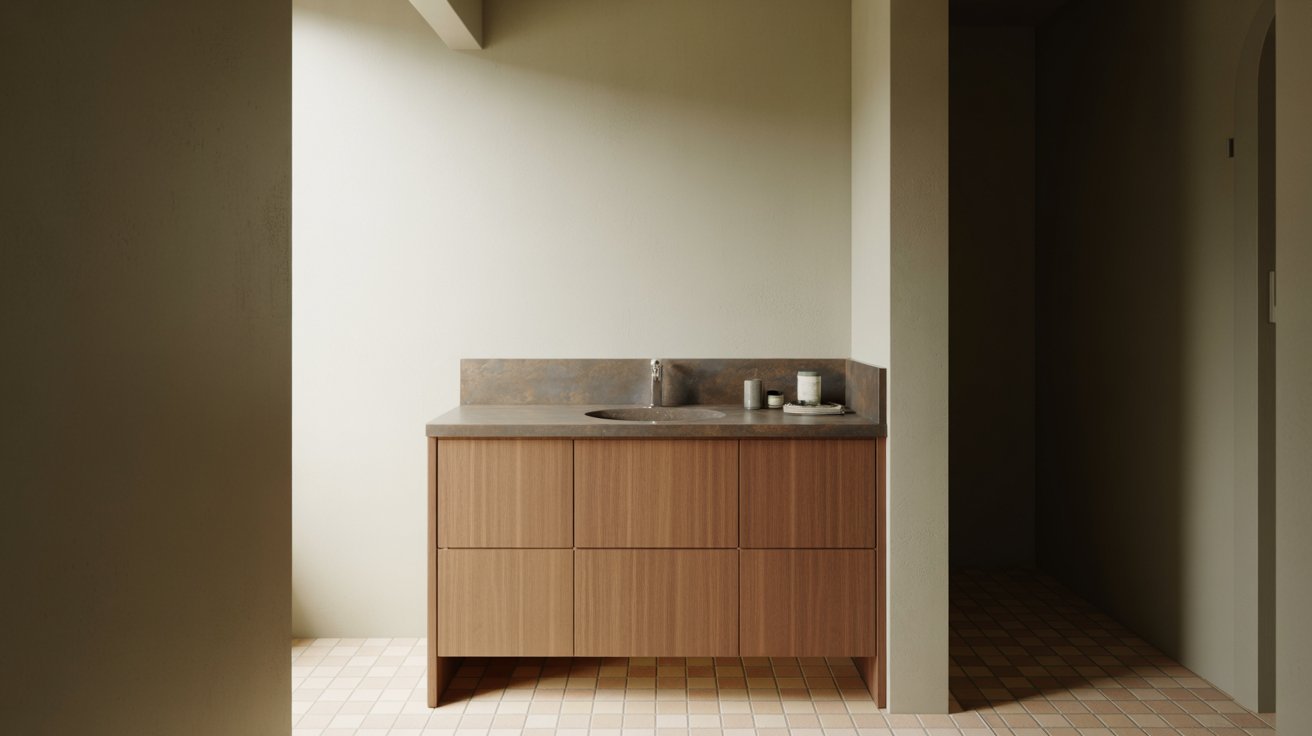
The standard range is 18 to 24 inches. That covers most homes and most bathroom layouts without any major issues.
The most common depth is around 21 inches. Most sinks, plumbing setups, and cabinet designs are built around this number.
This range gives you enough counter space to be useful without taking over the room. It also lines up with standard plumbing rough-in distances, which keeps installation simple.
If you are shopping without a tape measure, 21 inches is a safe starting benchmark.
Common Bathroom Vanity Depth Sizes Explained

Vanity depths fall into three main categories. Each suits a different bathroom type and a different set of needs.
Shallow Depth Vanities (16 to 18 Inches)
These are built for tight spaces. Powder rooms, guest bathrooms, and narrow layouts benefit most from a shallow vanity.
The biggest advantage is floor space. A shallower vanity gives you more room to move around, which matters in a small bathroom.
The trade-off is storage. Shallower cabinets mean shallower drawers and less room under the sink.
Standard Depth Vanities (20 to 22 Inches)
This is the most popular choice. It balances storage, comfort, and usability for most people and most layouts.
Most prefabricated vanities are built to this depth, so you get far more options in style, finish, and price.
It also aligns well with standard plumbing placements, so installation rarely throws up surprises.
Deep Vanities (24 Inches or More)
These belong in larger bathrooms. Master baths and spacious en-suites are where a 24-inch or deeper vanity makes real sense.
The downside is clearance. A deeper vanity pushes further into the room. You need enough floor space in front to move and open drawers comfortably.
Just measure carefully before committing. A deep vanity in a small bathroom creates more problems than it solves.
Why Bathroom Vanity Depth Matters
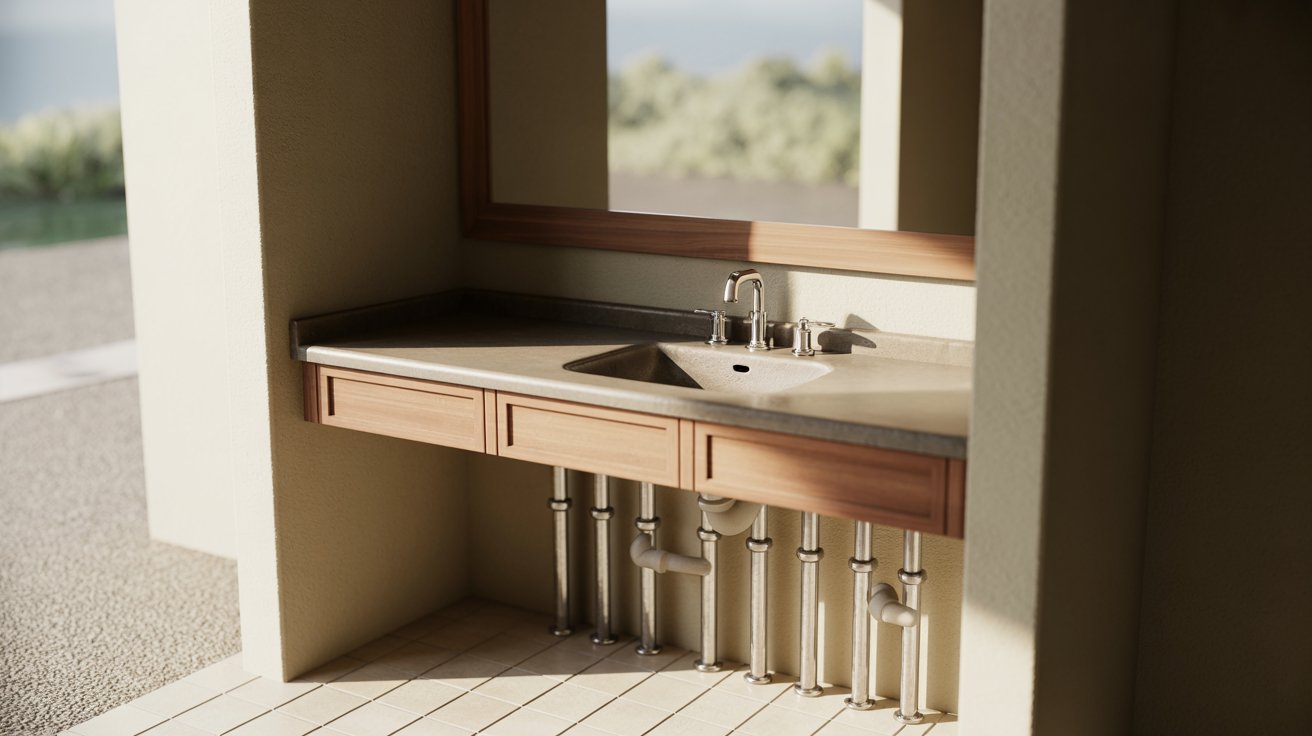
Depth affects how freely you can move. A vanity that sticks out too far narrows the walking path and makes smaller bathrooms feel cramped.
It also changes how the sink works. A deeper vanity usually means a larger, more comfortable basin with less splashing.
Storage is tied directly to depth. Deeper cabinets hold more. Shallower ones mean you need to find storage elsewhere.
Plumbing alignment matters too. The depth of your vanity has to match where your pipes come out of the wall. Getting this wrong adds cost and hassle during installation.
Standard Bathroom Vanity Dimensions (Depth, Width, Height)
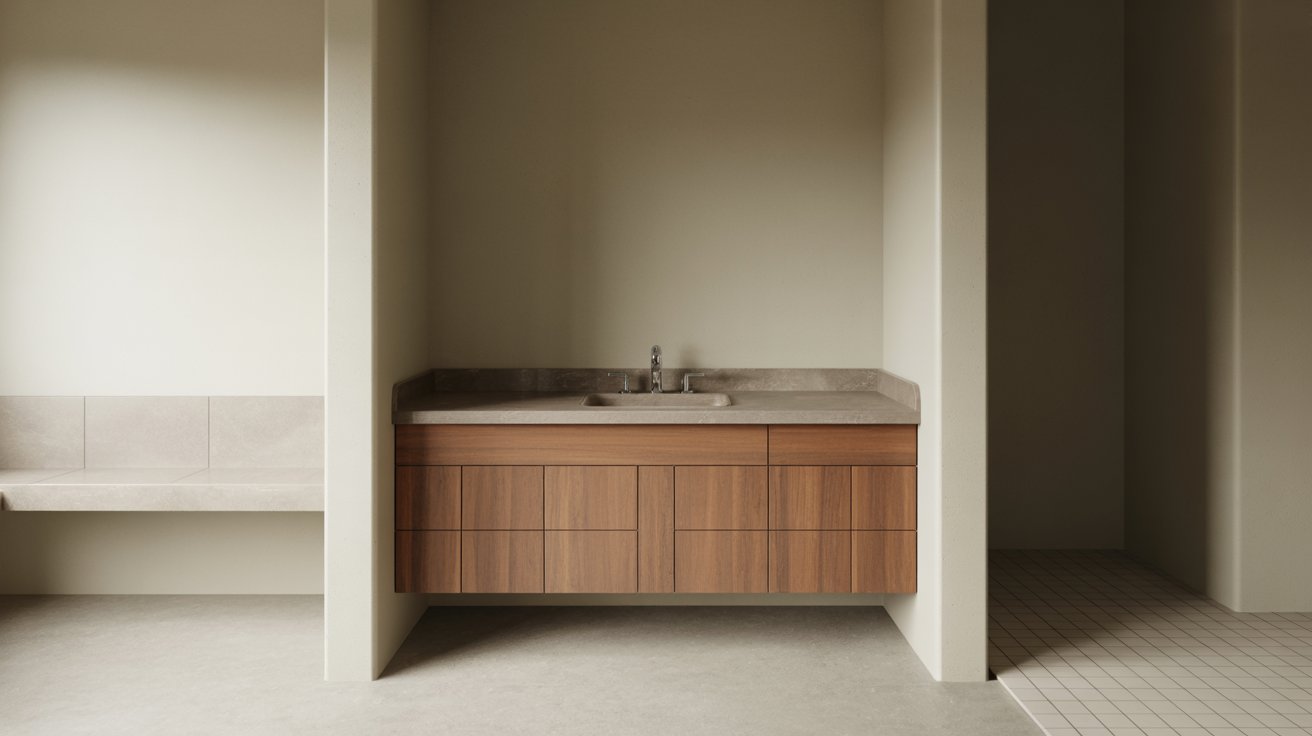
Depth is the measurement that trips people up most. But it works alongside width and height, so you need all three.
Width ranges from around 18 inches for a single sink to 72 inches for a double vanity. Your wall space sets the limit.
Standard height sits between 30 and 36 inches. Newer comfort-height designs run at 34 to 36 inches, which most adults find easier to use.
Always look at depth and width together. A 24-inch deep vanity at 60 inches wide takes up significantly more floor space than a 20-inch deep one.
How to Choose the Right Vanity Depth for Your Bathroom

Choosing the right depth comes down to a few clear, practical steps. Work through each one before you buy.
Measure Your Available Space
Measure the distance from the wall to the nearest obstacle in front of it. That could be a door, toilet, or opposite wall.
You need at least 30 inches of clear space in front for comfortable use. Factor in how far drawers and doors swing open too.
Write the measurements down. Do not rely on memory when you are standing in a showroom.
Consider Bathroom Type
Powder rooms work well with shallow vanities. Less daily use, less storage needed, and usually less floor space available.
Master bathrooms can handle more depth. Heavy daily use and higher storage needs make 22 to 24 inches a smart call.
Shared bathrooms fall in between. A 20 to 22 inch depth usually covers most needs without crowding the room.
Think About Storage Needs
Be honest about what you store. A solo user with minimal products can manage with a shallower vanity just fine.
A family sharing one bathroom needs proper drawer and cabinet space. Deeper vanities deliver that.
If space is tight but storage needs are high, add wall cabinets or shelving to make up the difference.
Check Door and Walkway Clearance
This step gets skipped the most and causes the most regret. A vanity that blocks a swinging door or narrows a walkway is frustrating every single day.
The recommended minimum clearance in front of a vanity is 30 inches. Some building codes require it.
Check if drawers or cabinet doors will swing into another fixture when open. Test it before the vanity is installed, not after.
Ideal Vanity Depth for Different Bathroom Types
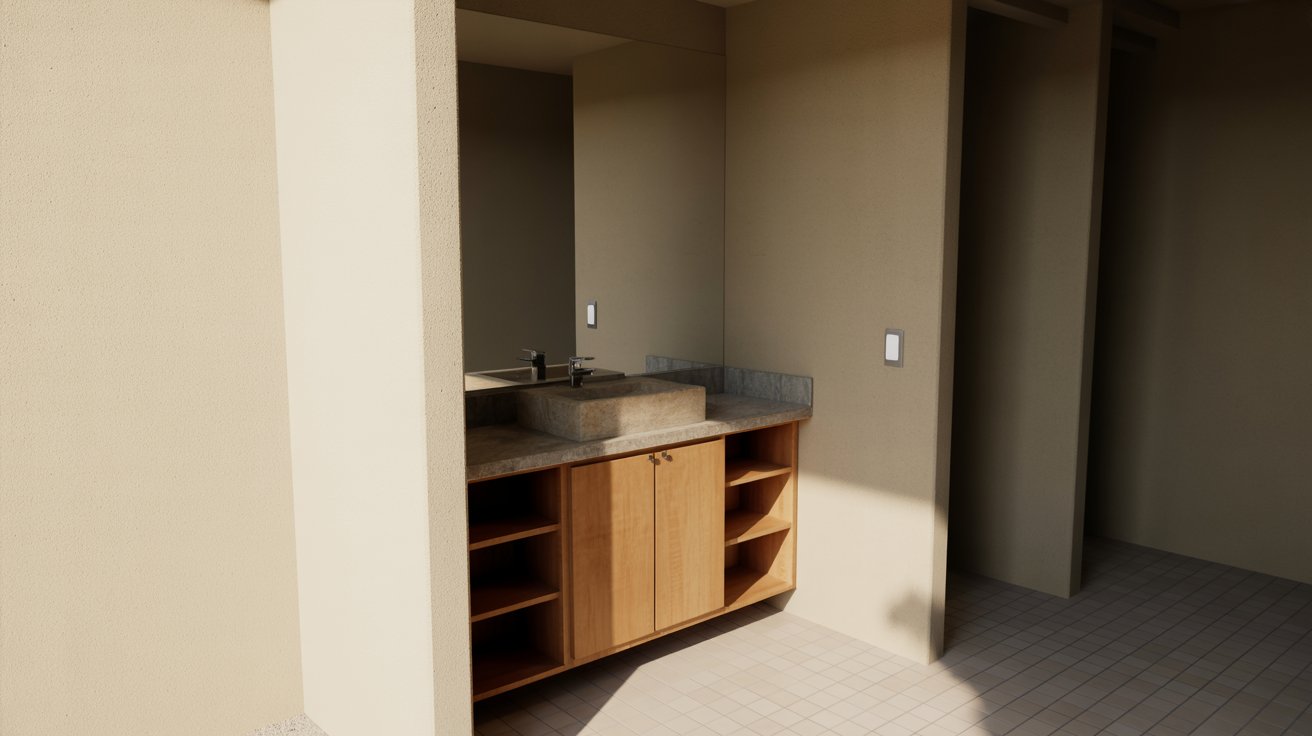
Small bathrooms do best with 16 to 18 inches. Keeping depth minimal opens up floor space and makes the room feel less crowded.
Medium bathrooms handle 20 to 22 inches well. Good storage, comfortable use, and still enough clearance to move around freely.
Large and master bathrooms can go 22 to 24 inches or more. With extra square footage available, a deeper vanity adds real value.
Always match the depth to your actual room, not to what looks good in a catalog.
Wall-Mounted vs Freestanding Vanities: Does Depth Differ?
Yes, depth does differ between these two styles. Here is a quick comparison.
| Feature | Wall-Mounted Vanity | Freestanding Vanity |
| Typical Depth | 16 to 20 inches | 20 to 24 inches |
| Storage Space | Less | More |
| Visual Feel | Open, spacious | Grounded, traditional |
| Floor Space | More visible floor | Covers floor area |
| Installation | Needs wall support | Easier to install |
| Best For | Small or modern spaces | Larger bathrooms |
Wall-mounted vanities run shallower and make the floor visible, giving the illusion of more space. Freestanding ones sit on the floor, run deeper, and offer more storage.
Common Mistakes to Avoid When Choosing Vanity Depth
Most vanity buying mistakes come from skipping the basics. People fall in love with a style and forget to check the numbers. Here are the ones I see most often.
- Choosing too much depth for a small space: A deep vanity in a tight bathroom kills walking room fast. Measure first, shop second
- Ignoring door swing clearance: Cabinet doors and drawers need room to open without hitting the toilet or a wall
- Overlooking plumbing alignment: Your pipes sit at a fixed point. A vanity that does not line up creates a plumbing problem
- Prioritizing style over function: A vanity can look great and work terribly. Make sure the depth fits your routine before you commit
Getting these right before buying is always easier than dealing with returns or reinstallation.
Pro Tips to Maximize Space Without Increasing Depth
Sometimes the right depth is smaller than you wish it could be. That does not mean sacrificing storage or comfort. Here are smarter ways to work with a shallower setup.
- Use a floating or wall-mounted vanity: Lifting it off the floor creates visual openness and often allows a slimmer depth
- Install a corner vanity: Corners are wasted space in most bathrooms. A corner vanity uses that dead zone without eating into the main floor area
- Add vertical storage: A tall cabinet or shelving beside the vanity adds serious storage without touching your floor space
- Choose a slim or undermount sink: A slimmer sink profile frees up more usable cabinet depth behind it
Small adjustments like these go a long way. You do not always need more depth. Sometimes you just need a smarter layout.
Conclusion
A wrong vanity depth is one of those mistakes that bothers you every single day. I have watched people settle for a bathroom that never quite works because of one skipped measurement.
You do not have to be one of them. Take the time, get the numbers right, and buy with confidence.
If this guide helped you figure out your next step, share it with someone who is planning a bathroom update.
And if you have questions or want a second opinion on your space, drop them in the comments. I am happy to help.
Frequently Asked Questions
What Is the Most Common Depth for Bathroom Vanities?
Around 21 inches is the most common depth found in standard homes. It works well for most bathroom sizes and plumbing setups.
Can a Bathroom Vanity Be Less Than 18 Inches Deep?
Yes, but only practical for very small spaces like powder rooms. Storage and sink size will be quite limited at that depth.
Is a 24-Inch Deep Vanity Too Big?
It is only suitable for larger bathrooms with enough clearance in front. In a smaller bathroom, it will make the space feel cramped.
How Much Space Should Be in Front of a Vanity?
At least 30 inches of clearance is recommended. This keeps movement comfortable and meets most building guidelines.
Are Wall-Mounted Vanities Shallower Than Standard Ones?
Yes, they are typically designed with a shallower depth to save floor space, usually ranging from 16 to 20 inches.