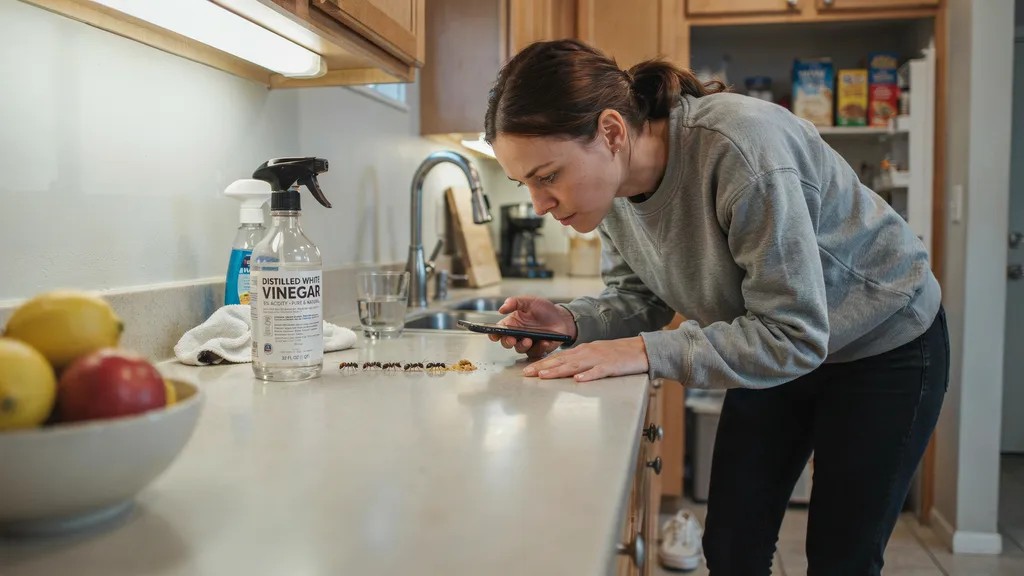
Have you ever seen ants marching across your kitchen counter and wondered, does vinegar kill ants? You are not alone.
Many people try vinegar as a simple home solution and want to know if it actually works.
In this article, we’ll look at real results, how vinegar affects ants, the right way to use it, and what to do if ants keep coming back.
I’ve looked into common home methods and practical experiences to help you understand what really helps.
Let’s clear up the confusion and find the best approach for your ant problem.
Does Vinegar Kill Ants or Just Repel Them?
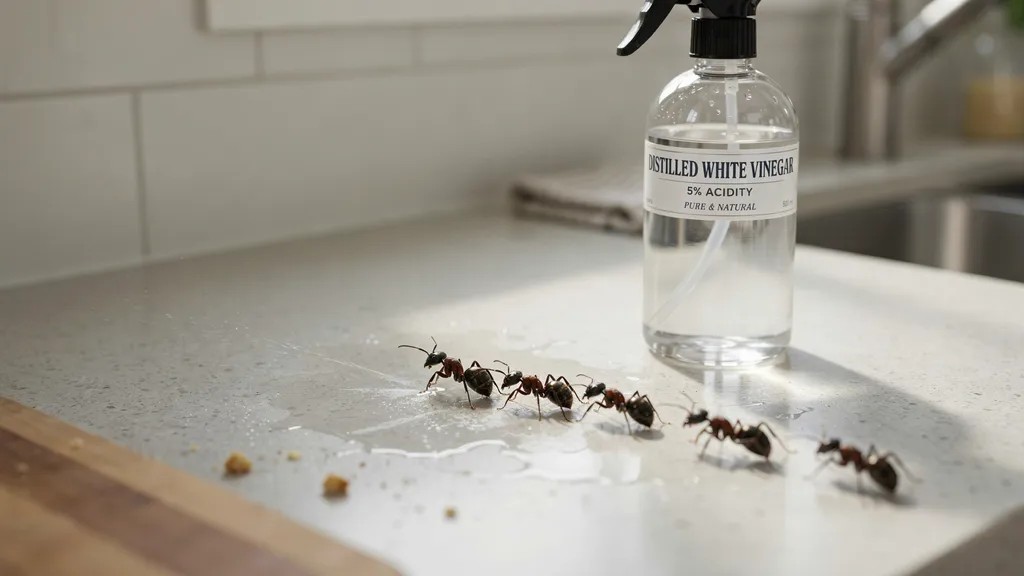
Vinegar is a popular home remedy for ants, but it usually does not kill ants instantly.
Instead, it works more like a temporary repellent by disturbing the scent trails ants use to find food and guide others.
The strong vinegar smell can cover these trails, making it harder for ants to follow the same path. However, this does not remove the ant colony or stop new ants from coming back.
Killing ants means removing the problem at its source, while repelling ants only helps reduce their activity for a short time.
Vinegar may help with small ant issues, but repeated infestations may need other solutions.
How Does Vinegar Work Against Ants?

Vinegar affects ants mainly by interfering with their natural communication system and making areas less attractive to them.
Vinegar Disrupts Ant Trails
Ants use pheromone trails, which are invisible chemical signals, to communicate and lead other ants toward food sources.
When vinegar is sprayed on these paths, its strong acidity and smell can remove or mask these signals. This makes it difficult for ants to recognize their usual route.
As a result, they may stop following the same trail, but this effect may not last forever if the source of the ants remains.
Why Ants Avoid Vinegar Smell
Ants have a strong sense of smell, which helps them locate food and communicate with their colony.
The sharp acidic smell of vinegar can confuse their scent tracking and make treated areas unpleasant for them.
Because of this, ants may avoid places where vinegar has been sprayed. However, the smell fades over time, so ants can return once the area no longer smells like vinegar.
Real Results: What Happens When You Spray Vinegar on Ants?
Spraying vinegar on ants can show noticeable results, but it is important to understand what it can and cannot do.
Many people find that vinegar helps reduce ant activity, especially when dealing with a small number of ants around the kitchen, windows, or entry points.
The strong smell can make ants leave the area and may break the trails they use to move around.
However, these results are often temporary because vinegar does not usually reach the hidden nest or remove the entire colony.
Some Ants May Leave the Area

When vinegar is sprayed directly on ant trails or common entry spots, ants may quickly move away because the smell disrupts their normal movement.
This can make the area look ant-free for a while. However, leaving the area does not always mean the problem is solved. If the colony is nearby, ants may create a new path and return later.
Ant Trails May Disappear Temporarily

One of the most common results people notice is that visible ant trails disappear after using vinegar.
This happens because vinegar can remove the scent markers ants leave behind to guide other ants. Without these signals, ants may lose their route to food or water sources.
Large Colonies May Continue Appearing

For larger ant infestations, vinegar may not be enough. A colony can contain many ants hidden inside walls, soil, cracks, or other hard-to-reach places.
Since vinegar mainly works on the surface, it does not destroy the source of the infestation. You may continue seeing ants even after spraying because new ants keep coming from the nest.
Works Best for Small Ant Problems

Many homeowners find vinegar useful for minor ant issues, such as a few ants near food areas or small trails around doors and windows.
It can be a quick and affordable way to discourage ants from entering certain spaces. Keeping surfaces clean and removing food sources can also improve the results.
Needs Repeated Application
Vinegar does not create a long-lasting barrier against ants. The smell fades after some time, especially after cleaning, rain, or regular household activity.
Because of this, repeated spraying may be needed to maintain its effect. Regular use can help manage ant activity, but it may not provide a permanent solution.
Does Not Reach the Nest

The biggest limitation of vinegar is that it usually does not reach the ant colony. The queen and most ants remain hidden inside the nest, which allows the colony to survive.
For a long-term solution, you may need methods that target the colony rather than only the ants you see.
How to Use Vinegar Spray for Ants at Home
Using vinegar spray for ants is a simple method many people try because it uses common household items.
While it may not remove an entire ant colony, spraying vinegar in the right areas can help disturb ant trails and make certain spaces less attractive to ants.
For better results, focus on areas where ants enter, travel, or search for food. Always clean the area first and remove any food sources that may attract ants.
Simple Vinegar Ant Spray Recipe
Making a vinegar spray is easy and only requires a few basic items.
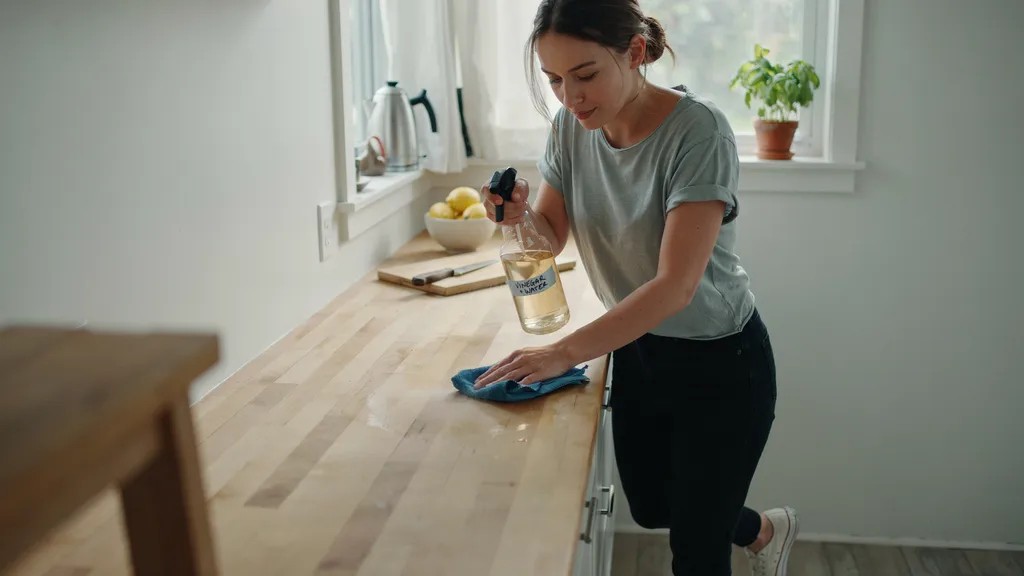
- Mix 1 part white vinegar with 1 part water in a spray bottle.
- Shake the mixture gently before use.
- Spray it directly on ant trails, entry points, and areas where ants are commonly seen.
- After spraying, you can wipe the surface clean, especially on kitchen counters or food preparation areas.
This helps remove leftover food smells and keeps the area fresh.
Where to Spray Vinegar
Knowing where to apply vinegar spray can make it more useful. Focus on places where ants usually enter or create paths.
- Around windows and doors: Spray along edges, frames, and gaps where ants may enter your home.
- Kitchen counters: Apply near areas where ants search for crumbs, spills, or food smells.
- Entry points: Spray near small openings, gaps, or spaces where ants come inside.
- Cracks and corners: Treat hidden spots where ants often move or build trails.
- Areas where ant trails appear: Spray along visible paths to disrupt their scent signals and discourage movement.
For best results, combine vinegar spray with regular cleaning and sealing possible entry points to reduce the chances of ants returning.
Does Vinegar Kill Ant Eggs or Ant Colonies?
Vinegar spray may help reduce visible ant activity, but it usually does not destroy ant eggs or the entire ant colony.
Most ant nests are hidden deep inside walls, cracks, soil, or other protected areas where vinegar cannot reach.
Ant eggs are also kept inside the nest, away from surface treatments, making them difficult to affect with a simple spray.
Even if some ants leave after vinegar is applied, the colony can continue producing more ants. This is why ants may return after a few days once the vinegar smell fades.
Vinegar can be useful for disrupting trails and managing small problems, but it is not a complete solution for removing an established ant infestation.
Vinegar vs Other Ant Control Methods
Different ant control methods work in different ways. Some only reduce visible ants, while others target the colony and provide longer-lasting results.
| Method | Kills Ants? | Long-Term Effect |
| Vinegar | Usually no | Temporary |
| Soap spray | Can kill visible ants | Short-term |
| Ant bait | Yes (targets colony) | Longer-lasting |
| Professional treatment | Yes | Best for severe infestations |
Common Mistakes When Using Vinegar for Ants
Using vinegar can help with ant control, but mistakes in application can reduce its effectiveness and allow ants to return.
- Spraying without cleaning food sources: Vinegar may disturb ants, but leftover crumbs, spills, or food smells can continue attracting them back.
- Only treating visible ants: Spraying the ants you see does not address hidden nests or the larger colony problem.
- Ignoring entry points: If cracks, gaps, windows, or doors are not sealed, ants can find new ways inside.
- Expecting instant results: Vinegar often works as a temporary deterrent, not a quick solution for every ant problem.
- Using vinegar near surfaces that can be damaged: Avoid spraying vinegar on sensitive materials like certain stones, wood finishes, or surfaces that react with acidity.
Natural Ways to Prevent Ants From Returning
Simple prevention habits can make your home less attractive to ants and reduce repeat problems.
- Keep counters clean: Wipe away crumbs, spills, and food residue that may attract ants.
- Store food properly: Keep sugar, snacks, and other food items in sealed containers.
- Seal cracks and gaps: Block small openings where ants may enter your home.
- Remove standing water: Fix leaks and remove moisture sources that attract pests.
- Clean pet food areas: Remove leftover pet food and clean bowls regularly.
- Use regular maintenance: Continue checking common entry points and problem areas to stop ants early.
Conclusion
Finding the right way to handle ants at home can take some patience.
Does vinegar kill ants? It can help reduce trails and keep some ants away, but it may not solve every infestation.
I’ve found that simple steps like cleaning food areas and blocking entry points often make a big difference along with any home remedy.
Try what works best for your space and notice the results over time.
Have you used vinegar for ants before? Share your experience in the comments or try more home care tips for helpful solutions.
Frequently Asked Questions
Does vinegar kill ants instantly?
No, vinegar usually does not kill ants instantly. It mainly helps disturb their scent trails and may make them leave the area.
How long does vinegar keep ants away?
The effect depends on the situation and usually lasts for a short time. Ants may return once the vinegar smell fades.
Can vinegar remove an ant infestation?
Vinegar can help with small ant problems, but it usually does not reach the nest. Larger colonies may need other methods.
Where should I spray vinegar for ants?
Spray vinegar near ant trails, entry points, windows, doors, cracks, and areas where ants are commonly seen.
Is vinegar safe to use around the home?
Vinegar is commonly used as a household cleaner, but avoid using it on surfaces that can be damaged by acidic liquids.