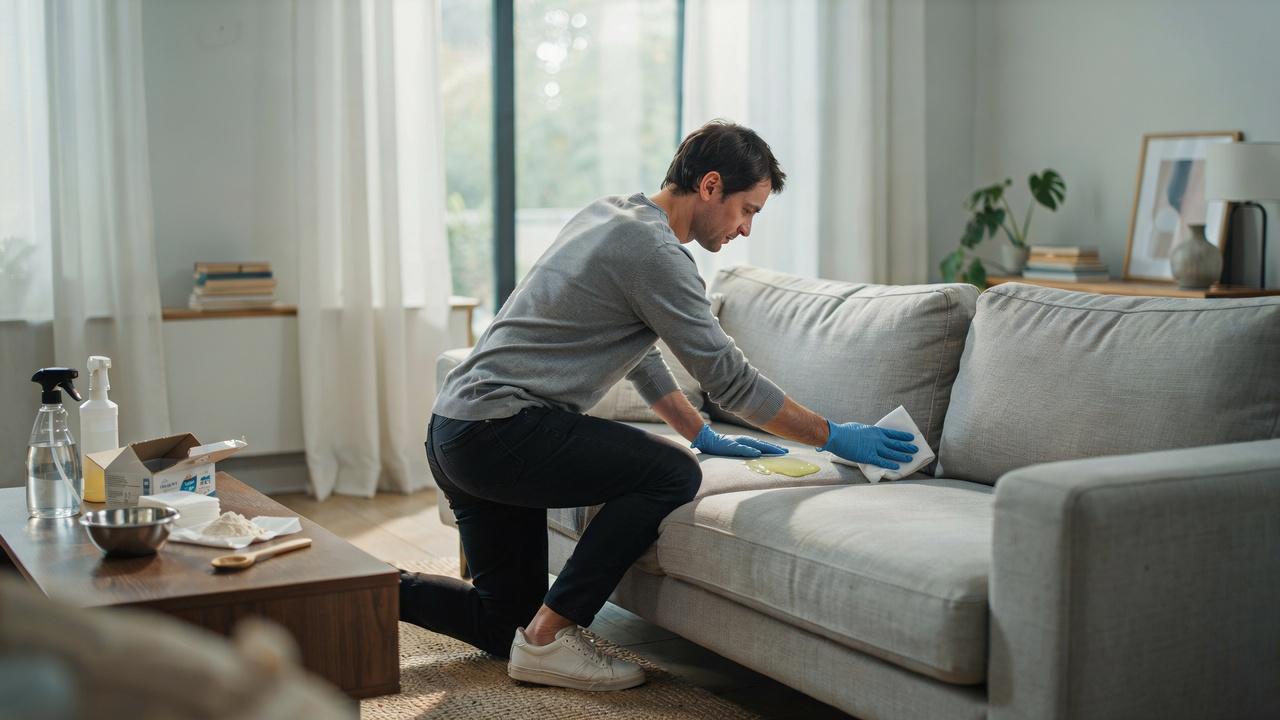
Finding vomit on your couch is never fun. It can happen fast, especially with kids or pets around, and the panic of "what do I do now" sets in quickly.
This guide gives you a clear, step-by-step way to clean vomit from a couch, remove the smell, and treat it based on your couch material.
You will also learn common mistakes to avoid and simple habits that stop stains from coming back.
I have handled this exact mess more times than I can count, so these steps come from real trial and error, not guesswork.
By the end of this article, you will know exactly what to do, calmly and confidently, the next time an accident happens on your couch.
Why You Should Clean Vomit from Couch Immediately
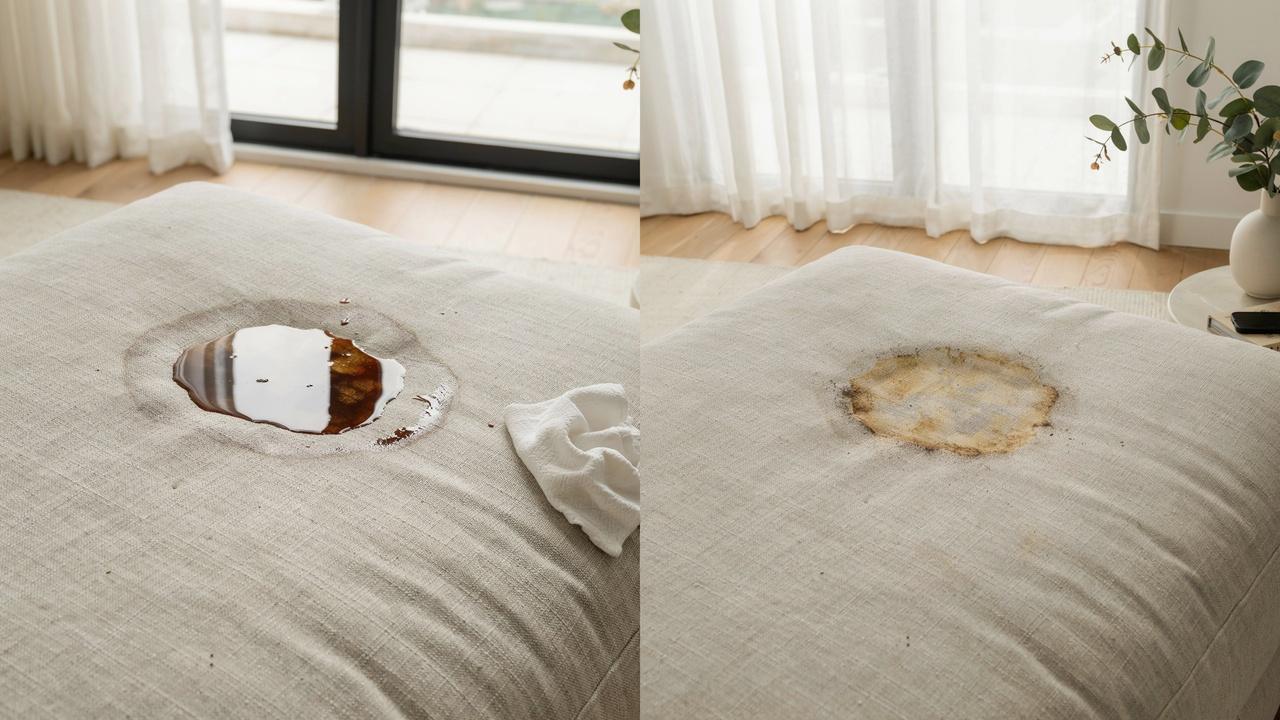
Vomit is acidic and can stain fabric fast. The longer it sits, the harder it becomes to remove.
Dried vomit hardens and sticks into cushions, making cleanup tougher later. Fresh stains come out much easier.
Vomit also carries germs and bacteria. Leaving it too long can spread illness, especially if kids or pets use the couch.
The smell is another issue. If left untreated, it can soak into the fabric and linger for days.Quick action also protects the couch material itself, preventing damage or discoloration.
Cleaning right away keeps your couch fresh, your home safer, and saves you extra work later.
What You'll Need to Clean Vomit from a Couch
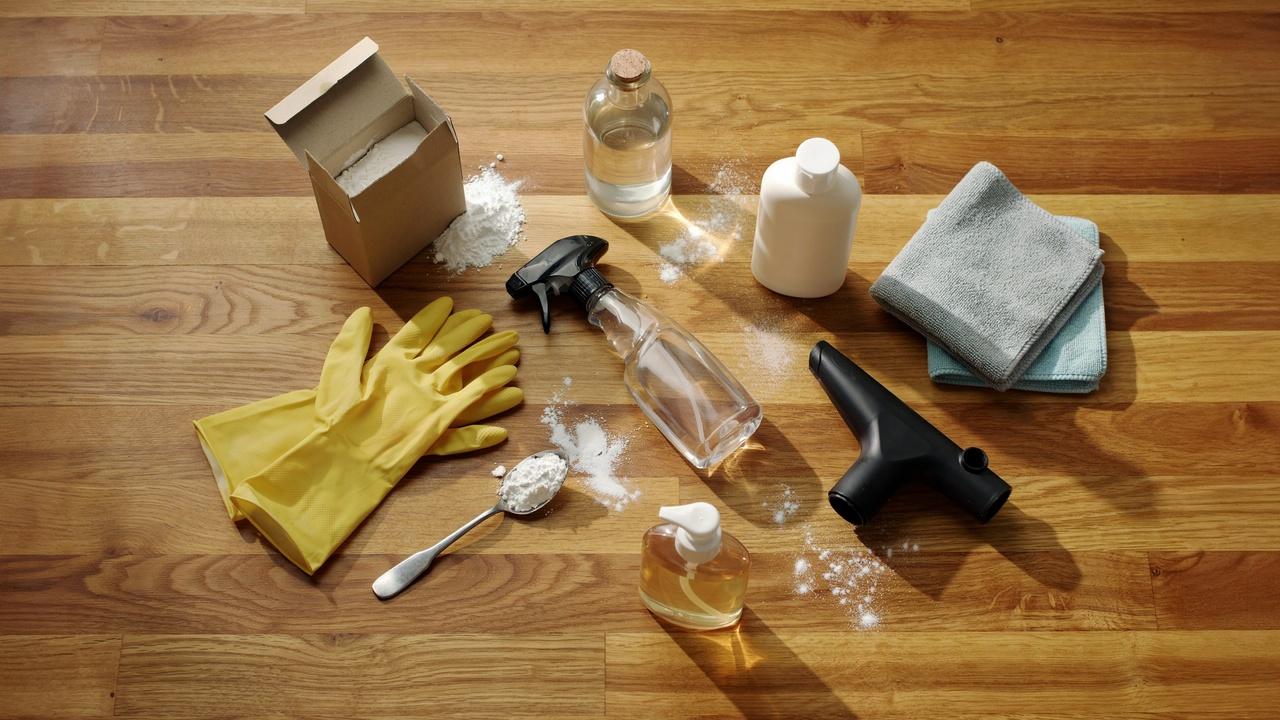
Gather a few simple items before you start. Having everything ready makes the cleanup faster and less stressful.
- Baking soda to absorb odor and moisture
- White vinegar to break down stains
- Clean cloths to blot without spreading the mess further
- Enzyme cleaner to break down organic matter and kill smell at the source
- Mild detergent for fabric that needs gentle washing
- Spoon, gloves, spray bottle, and vacuum to lift solids, protect your hands, apply solution evenly, and remove dried bits
How to Clean Vomit from Couch (Step-by-Step Process)
This section walks you through the full cleaning process from start to finish, step by step.
Step 1: Remove Solid Vomit Carefully
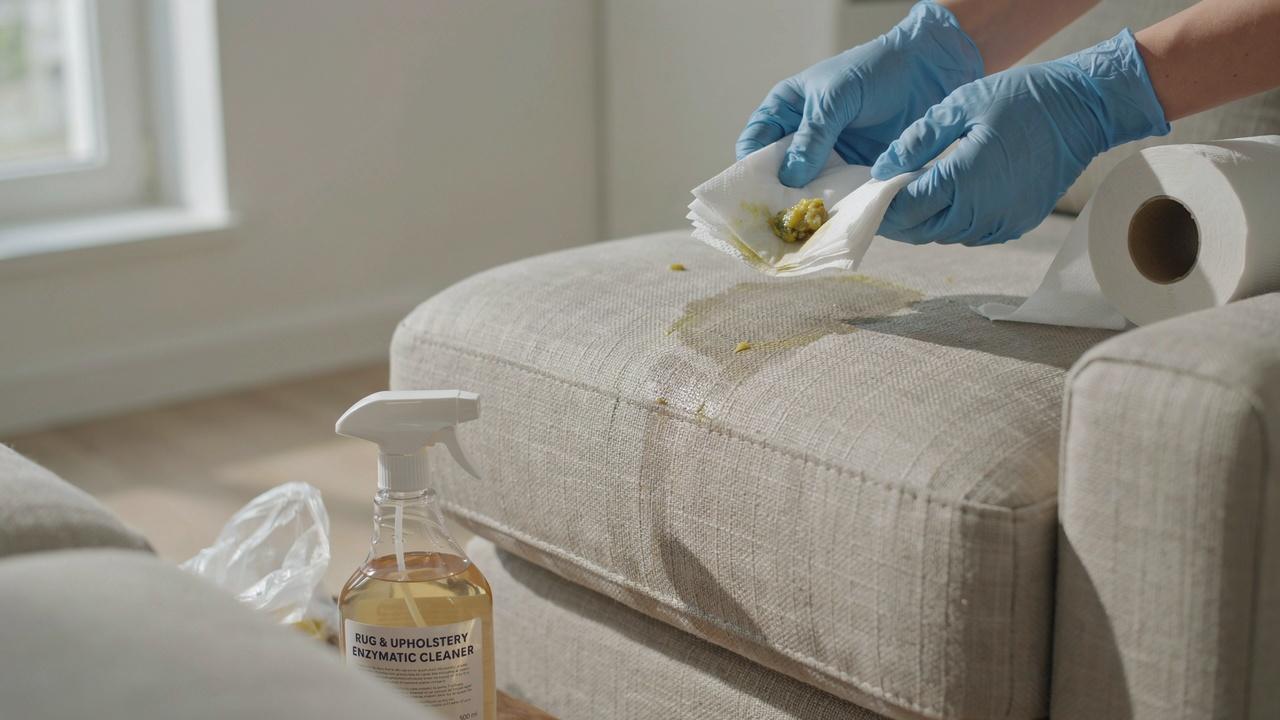
Use a spoon or a dull knife to scoop up solid material. Work from the outer edge toward the center so the stain doesn't spread.
Step 2: Blot and Absorb Moisture
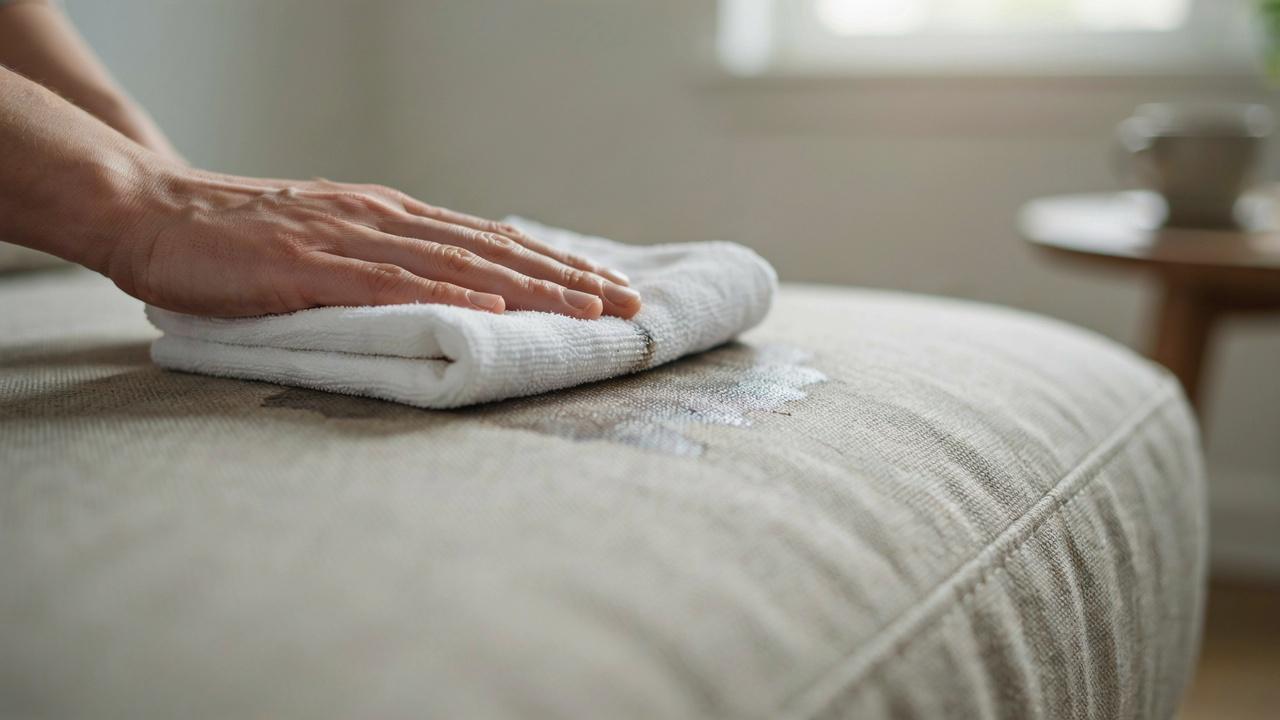
Press a clean cloth firmly on the wet area. Avoid rubbing, since that pushes liquid deeper into the couch fibers.
Step 3: Apply Cleaning Solution (Vinegar or Enzyme Cleaner)
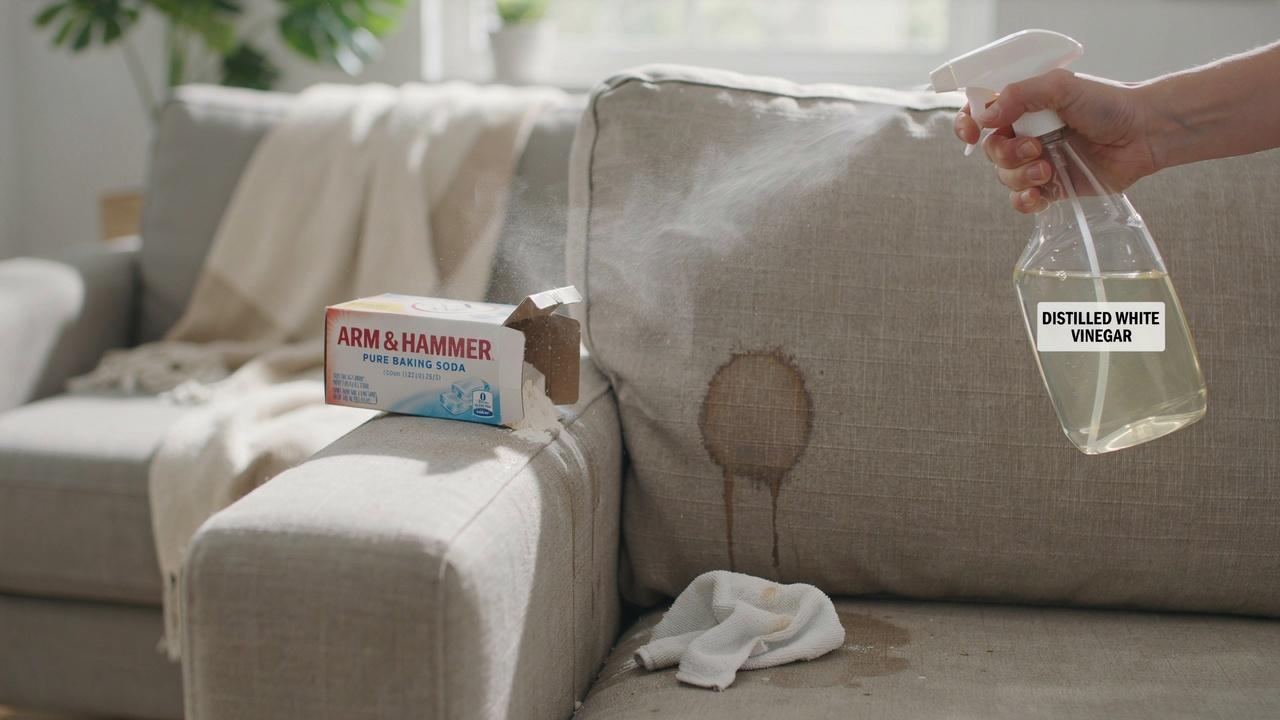
Mix equal parts water and vinegar, or use an enzyme cleaner as directed. Spray it lightly over the stained area.
Step 4: Gently Lift the Stain Without Scrubbing
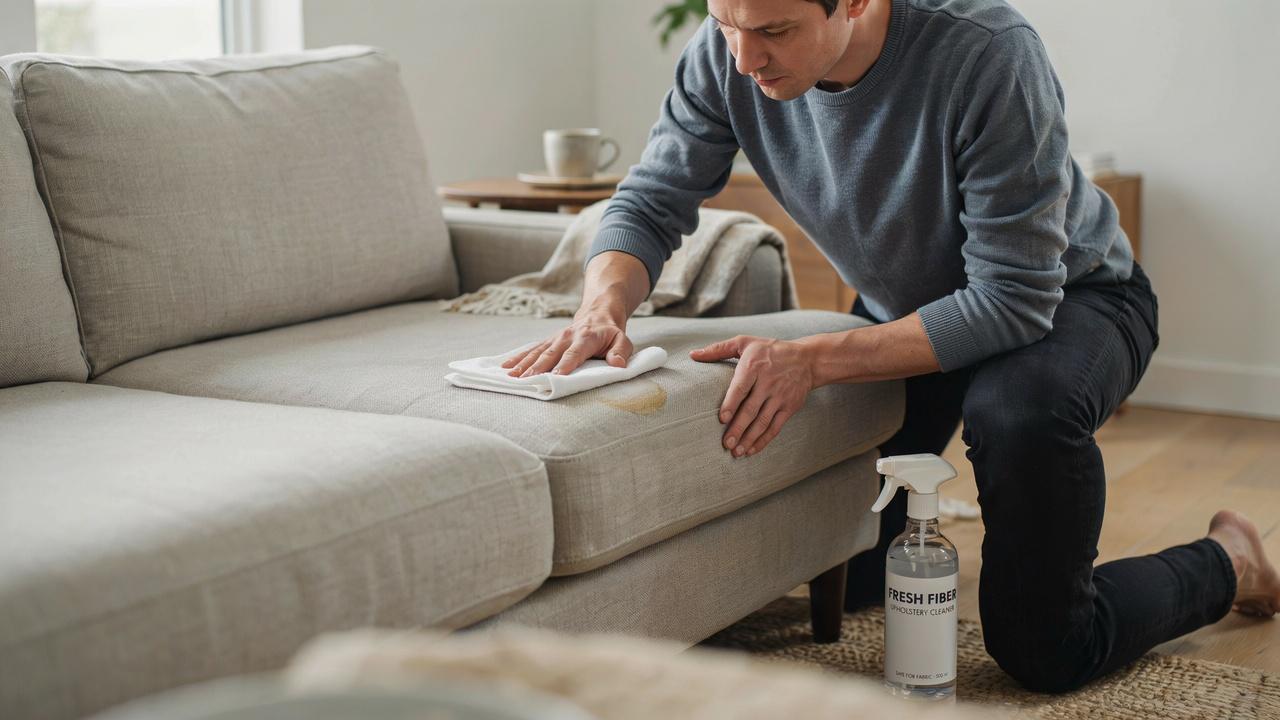
Dab the area with a cloth instead of scrubbing. Scrubbing can damage fabric fibers and spread the stain wider.
Step 5: Deodorize with Baking Soda
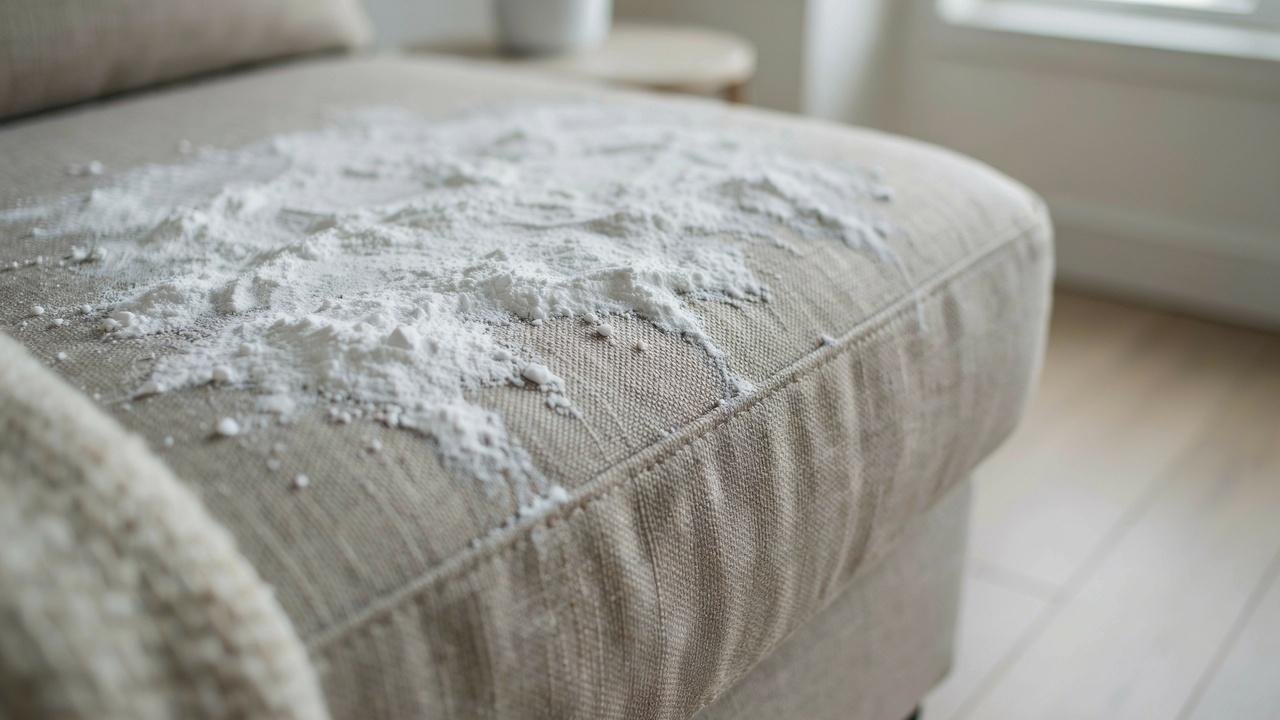
Sprinkle baking soda over the damp spot once it's mostly dry. Let it sit for a few hours to pull out remaining odor.
Step 6: Dry the Couch Completely
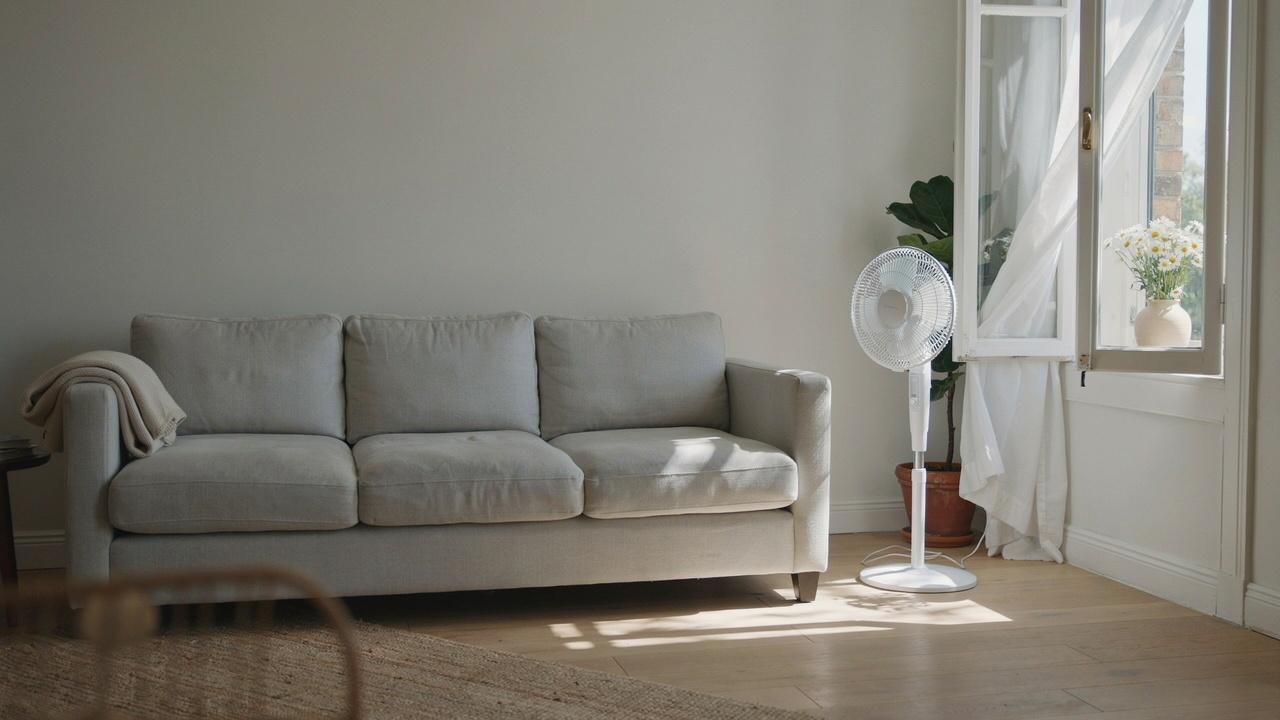
Vacuum up the baking soda, then let the area air dry fully. A fan or open window speeds up the process.
How to Clean Vomit from Couch Cushion (Deep Cleaning Guide)
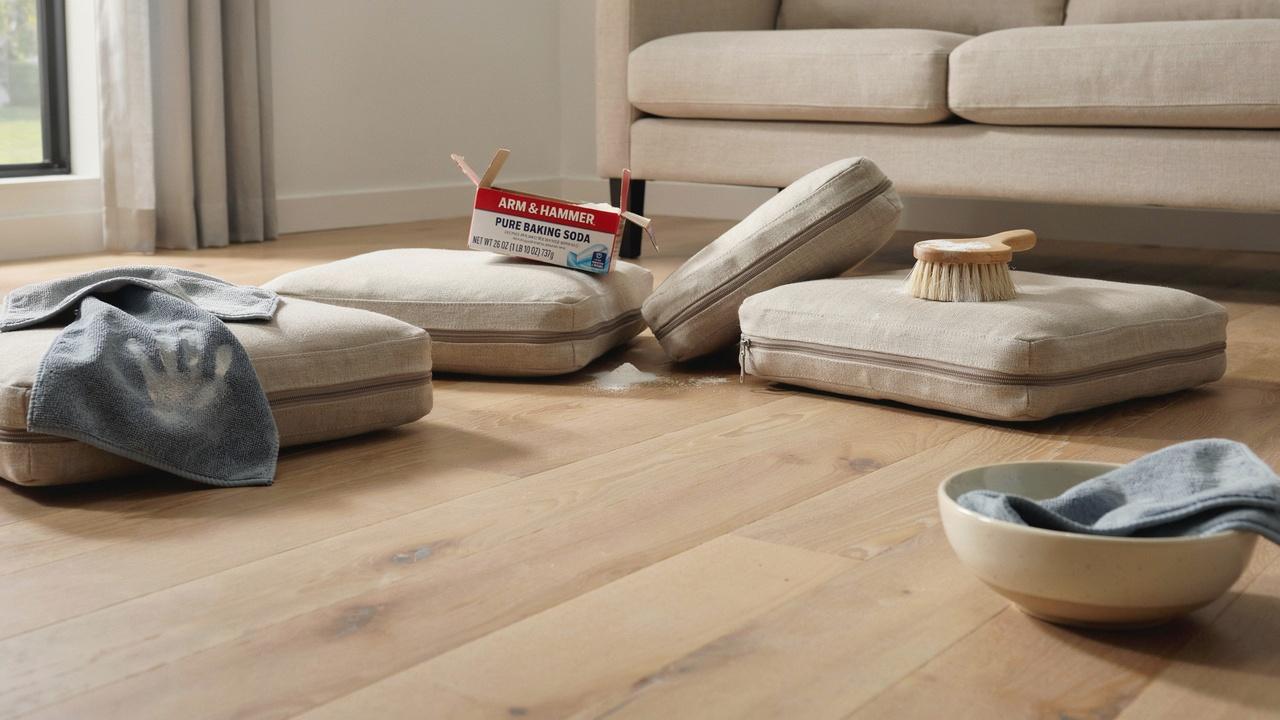
Cushions need extra care since they hold moisture longer. Here's how to clean them thoroughly without damaging the padding.
Remove and Separate Cushion Covers if Possible
If the cover is removable, take it off and wash it separately according to the fabric label instructions.
Clean Inner Cushion Without Soaking
Use a damp cloth on the foam or filling instead of pouring liquid directly on it. Too much water is hard to dry out.
Use Baking Soda for Deep Odor Absorption
Apply baking soda generously on both sides of the cushion. Leave it overnight for stronger odor control.
Treat Stubborn Stains with Enzyme Cleaner
For marks that won't budge, apply enzyme cleaner and let it sit for the time listed on the bottle before wiping clean.
Dry Cushions Fully to Prevent Mold and Smell Return
Place cushions in a well ventilated spot or outside in the sun. Full drying stops mold and prevents the smell from coming back.
How to Remove Vomit Smell from Couch
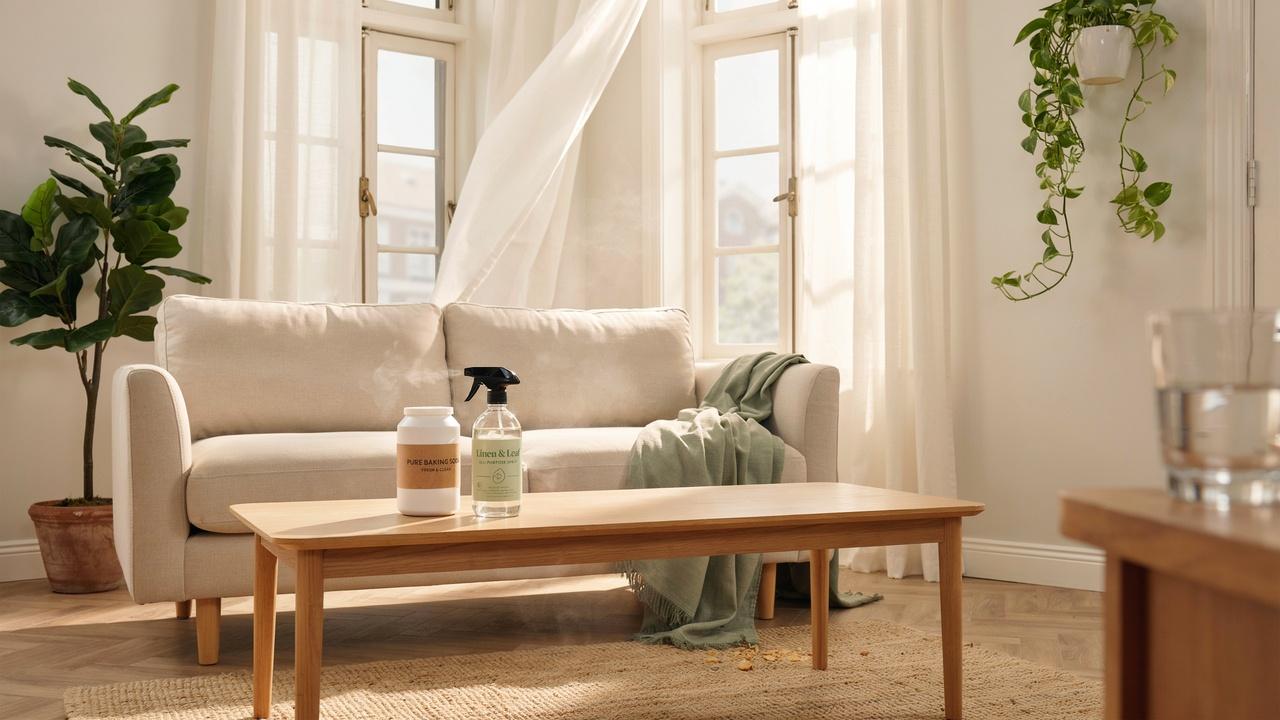
Odor often lingers even after the stain is gone. These methods target smell directly and keep your couch fresh.
Baking Soda Deodorizing Method
Sprinkle a generous layer of baking soda on the affected area. Leave it for several hours, then vacuum thoroughly.
White Vinegar Solution Method
Lightly mist the area with a vinegar and water mix. Vinegar neutralizes odor as it dries, and the smell fades once dry.
Enzyme Cleaners for Strong or Old Odors
For deep set or old smells, enzyme cleaners work by breaking down the source of the odor rather than just masking it.
How to Clean Vomit from Different Couch Materials
Different fabrics need different care. Using the wrong method on the wrong material can cause lasting damage.
Fabric Couch Cleaning Method
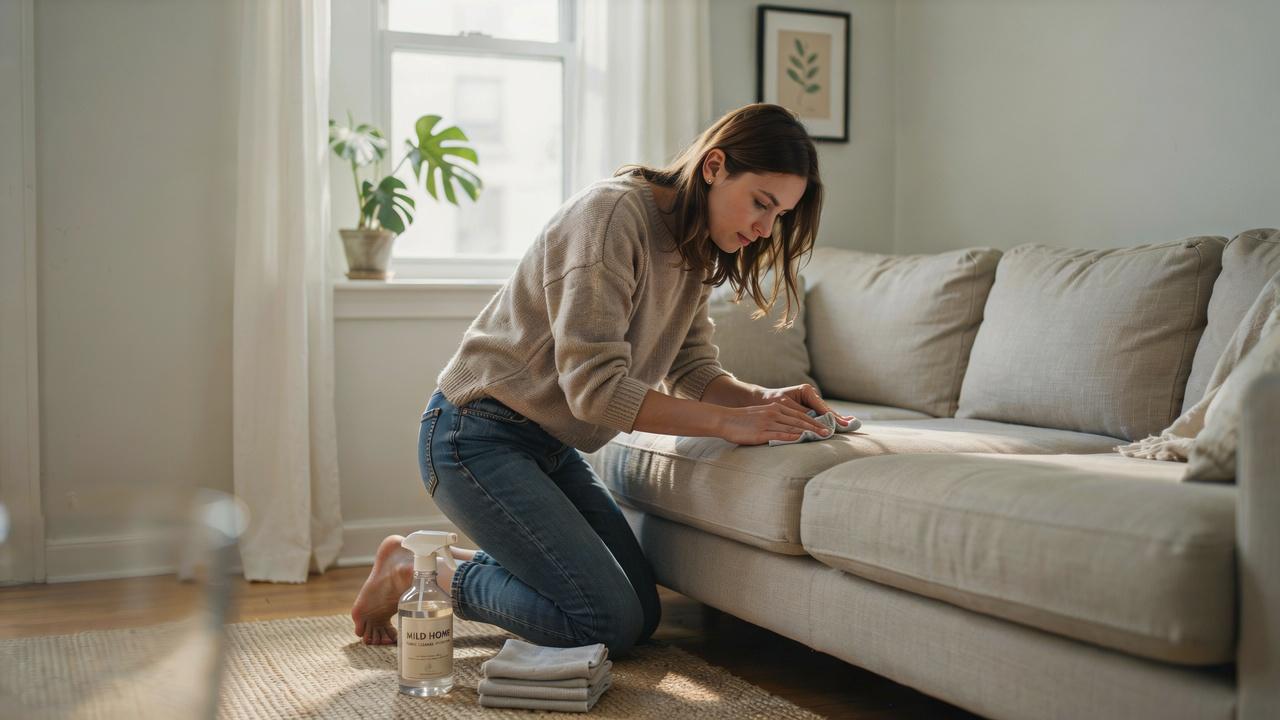
Check the care tag first. Most fabric couches handle a mild detergent and water mix applied with a soft cloth.
Microfiber Couch Cleaning Method
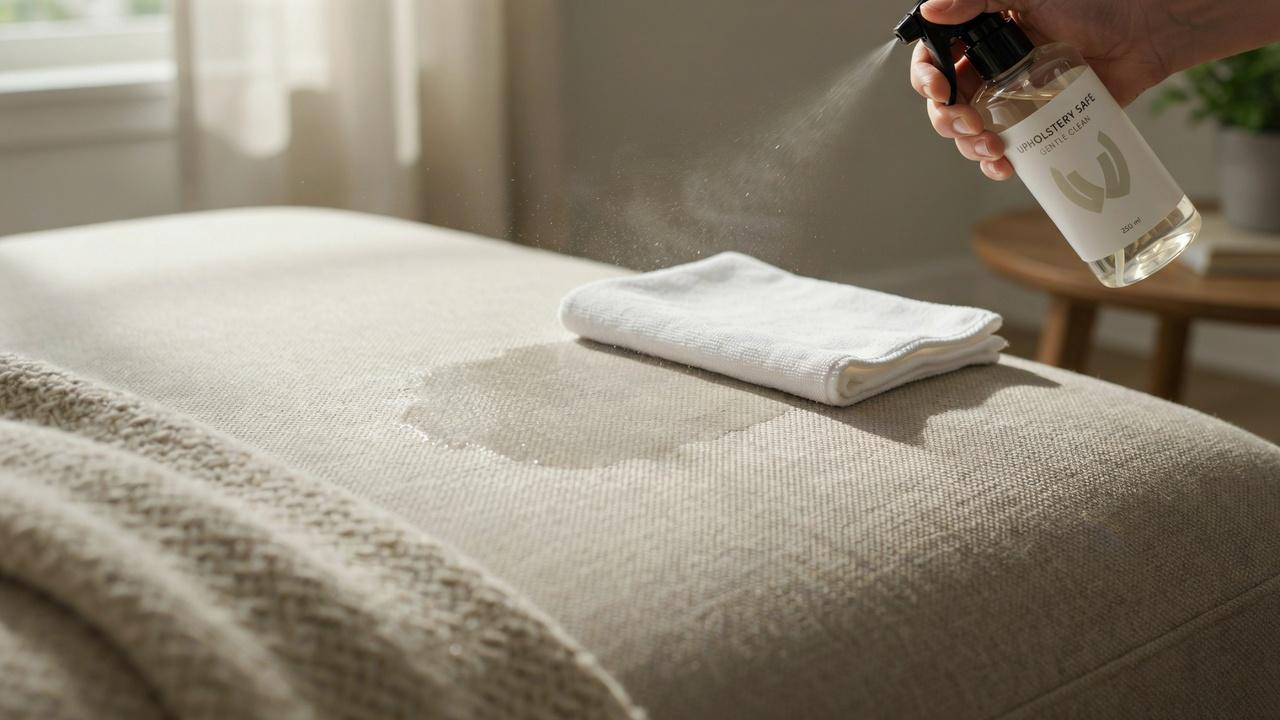
Microfiber often needs a solvent based cleaner instead of water, since water can leave rings. Always check the manufacturer's tag first.
Leather and Faux Leather Cleaning Method
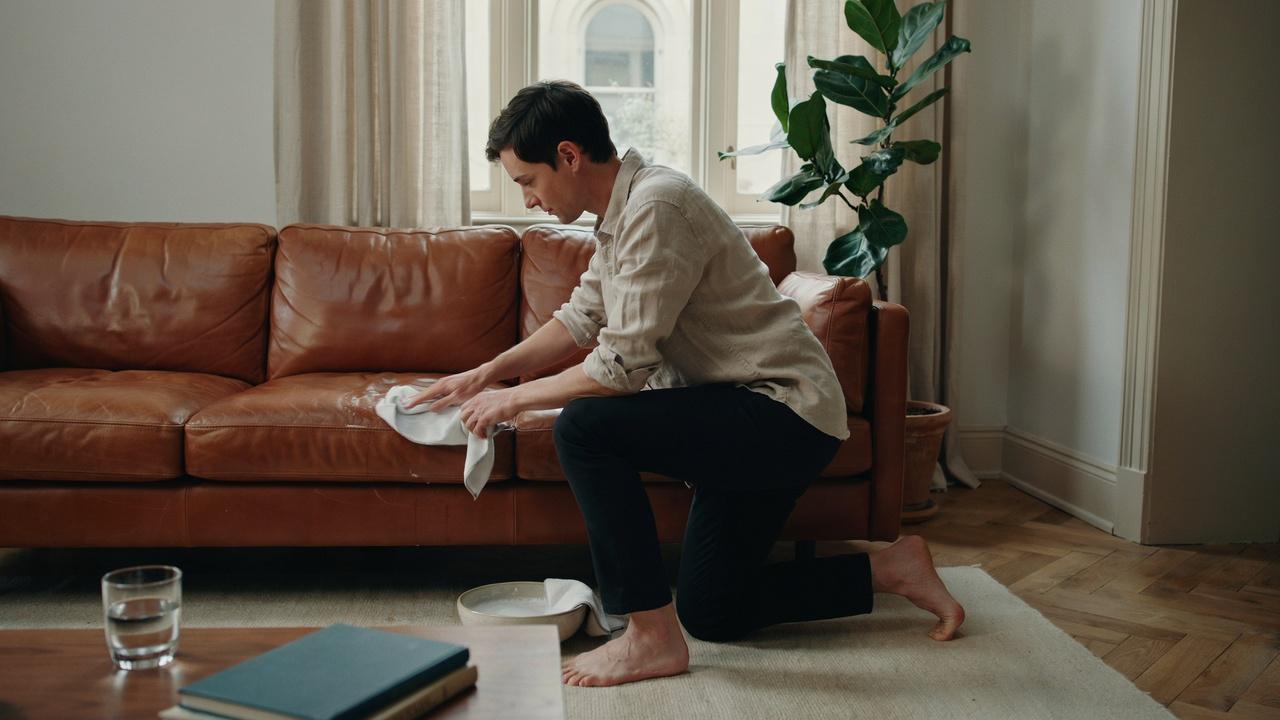
Wipe leather with a damp cloth and mild soap, then dry immediately. Avoid soaking, as leather absorbs moisture quickly and can warp.
When to Call a Professional Upholstery Cleaner
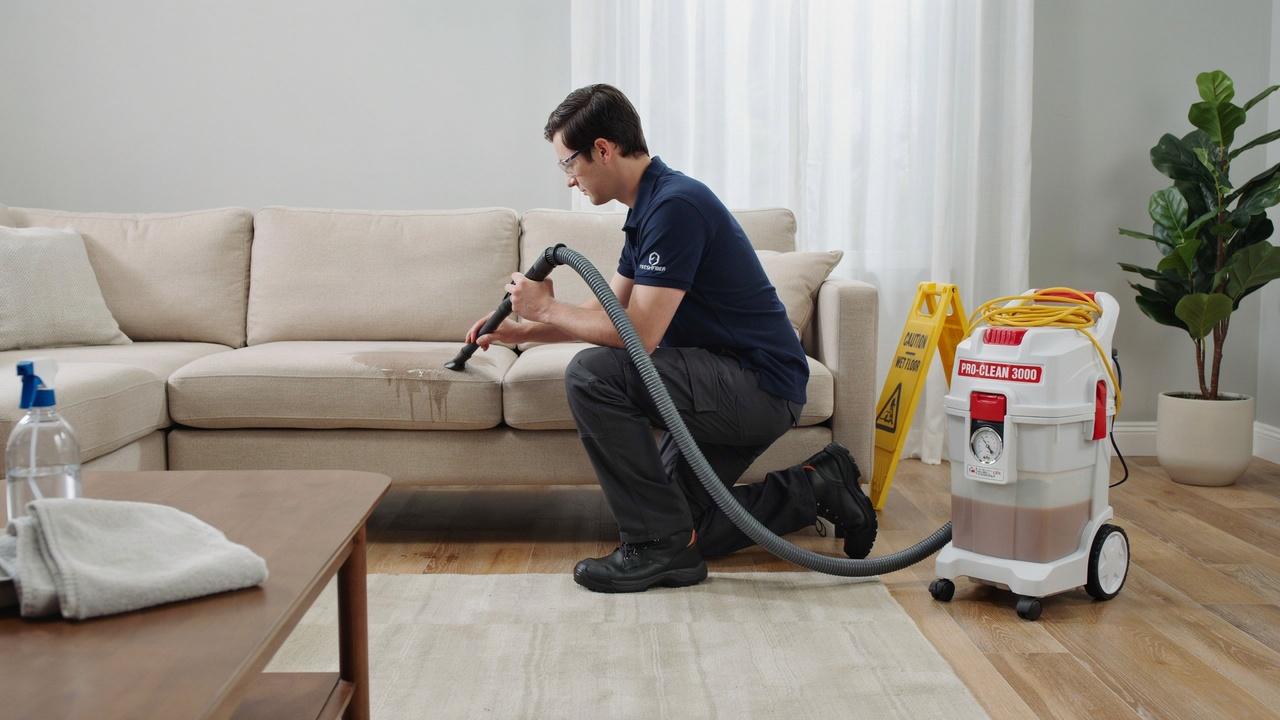
If the stain or smell won't go away after repeated attempts, or if the couch material is delicate, a professional cleaner can handle it safely.
This is also a good option for antique or expensive furniture where a wrong cleaning method could cause permanent damage.
Common Mistakes to Avoid When Cleaning Vomit from Couch
Small errors during cleanup can make stains and smells worse. Here are the most common ones to watch for.
- Rubbing the stain instead of blotting, which pushes it deeper into the fibers and makes it harder to remove
- Using too much water on cushions, which soaks into the padding and takes days to dry
- Letting the couch dry too slowly, since excess moisture can lead to mildew and a musty smell
- Skipping airflow while drying, which gives mold a chance to grow inside the cushion
- Stopping at the stain and skipping the odor removal step, since cleaning alone won't get rid of the smell
- Forgetting to follow up with a deodorizing step like baking soda or vinegar to fully clear the odor
Tips to Prevent Long-Term Stains and Odors
A few simple habits can keep your couch looking and smelling clean for much longer.
- Act immediately after accidents, since the longer vomit sits, the more it soaks into the fabric
- Clean it up as soon as possible for the best result
- Always test cleaning solutions on a hidden spot first to check for color changes or damage
- Apply the cleaner to the visible area only after the patch test looks safe
- Use washable protective covers on couches and cushions to add a layer of protection and simplify future cleanups
Conclusion
Accidents happen, especially with kids or pets around, and I've cleaned my own share of couch messes at 2 a.m. with tired eyes and a spoon in hand.
The good news is that a little baking soda, some vinegar, and patience go a long way. Next time you need to clean vomit from a couch, you'll know exactly what to do without panic.
Give these steps a try, and let me know how it worked for you in the comments. Found this helpful? Share it with a friend who might need it too.
Frequently Asked Questions
How do I clean vomit from a couch quickly?
Remove solid material first, then blot the area with a damp cloth. Follow up with a vinegar or enzyme cleaner to lift the stain.
Does baking soda really remove vomit smell from a couch?
Yes, baking soda absorbs moisture and odor when left in the area for a few hours. Vacuum it up once it has done its job.
Can I use water alone to clean vomit stains?
Water alone can help with blotting, but it won't fully break down the stain or smell. Vinegar or enzyme cleaner works better.
Is it safe to clean vomit from a leather couch the same way as fabric?
No, leather needs a different approach. Wipe with a damp cloth and mild soap, then dry it right away to avoid damage.
How long does it take for a couch to fully dry after cleaning?
Drying time depends on airflow and how much moisture was used, but it usually takes a few hours to a full day. A fan speeds up the process.