I still remember the day I found black mold in shower corners of my own bathroom. It scared me at first. I did not know if it was safe to touch or clean on my own.
That is why I wrote this guide. I will show you simple steps to remove black mold in shower areas using things you already have at home.
You will also learn why it grows and how to stop it from coming back.
I tested these methods myself, so you can trust what you read here. If you want a clean, safe bathroom without calling a pro, keep reading.
This guide covers causes, removal steps, safety tips, and prevention, all in one place.
What Is Black Mold in Bathrooms?

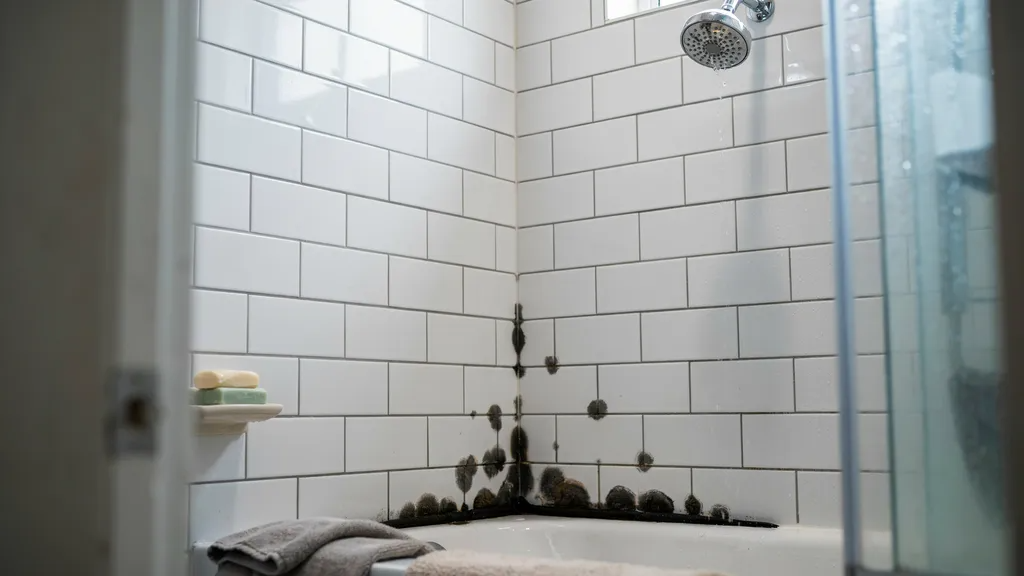
Black mold is a type of fungus that grows in damp spots. In bathrooms, it often shows up as dark spots or patches on walls, tiles, or grout.
It thrives in warm, wet places with poor air flow. Shower areas give it the perfect home because of constant moisture.
Some types of black mold can cause health issues like coughing or skin irritation. It is not always dangerous, but it should never be ignored.
Knowing what it looks like helps you catch it early before it spreads further across your bathroom.
What Causes Black Mold in Shower Areas?

Black mold in shower spaces grows because of trapped moisture. Every time you shower, water droplets settle on tiles, curtains, and grout lines.
Without proper airflow, this water does not dry fast enough. Warm and humid air gives mold spores the perfect place to grow.
Leaky pipes or cracked tiles can also add extra moisture behind the scenes. Poor lighting and rare cleaning make it worse, since mold spores spread quietly in dark, damp corners.
Knowing these causes helps you control them early, so mold does not get the chance to settle in.
Where Black Mold in Shower Usually Appears

Black mold likes to hide in spots that stay wet the longest. You will often spot it along grout lines between tiles.
It also grows on shower curtains, especially the bottom edge. Check the corners of your shower floor and the caulking around the tub or glass doors. Showerheads and faucet bases can also collect mold over time.
Don't forget the ceiling above your shower, since steam rises and settles there too.
These spots stay damp for hours after each shower, giving mold the perfect setup to grow and spread.
How to Remove Black Mold in Shower Using Household Cleaners
This section shares simple cleaning methods using items you likely already have at home.
Method 1: Bleach solution (strong mold removal)
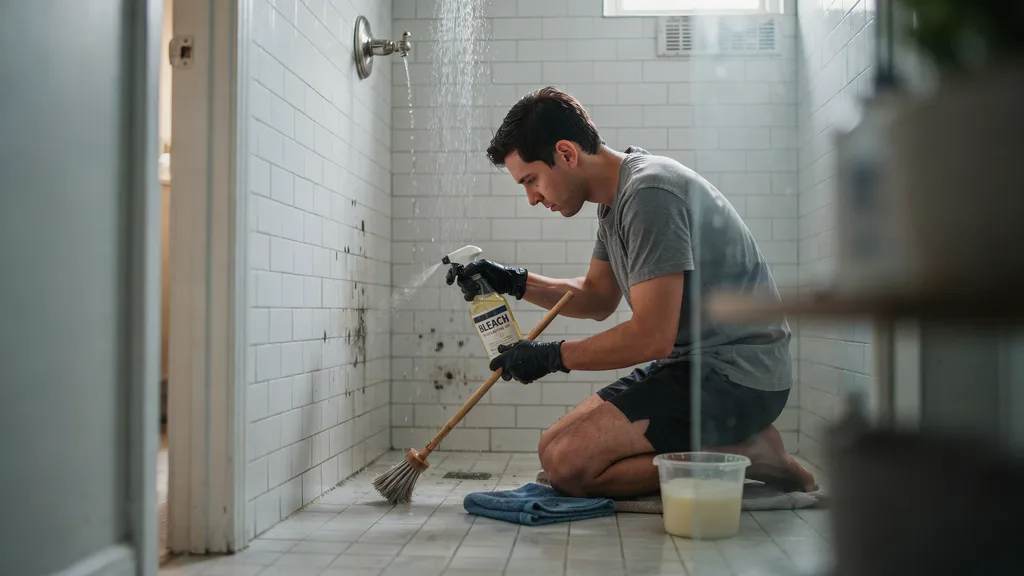
Mix one part bleach with three parts water in a spray bottle. Spray it directly on the moldy spots. Let it sit for ten to fifteen minutes so it can break down the mold.
Scrub the area with a brush, then rinse with clean water. This method works well for tough mold but always keeps the bathroom door open while using it.
Method 2: White vinegar spray (natural method)

Pour plain white vinegar into a spray bottle. Spray it on the mold without diluting it. Let it sit for thirty to sixty minutes so it can soak in.
Scrub gently with a brush or sponge, then rinse well with water. This method is gentle and safe for daily cleaning, and it works great for light mold or regular upkeep.
Method 3: Baking soda paste (for stubborn stains)

Mix baking soda with a small amount of water to form a thick paste. Spread the paste over the stained or moldy areas. Let it sit for fifteen minutes so it can loosen the mold.
Scrub with a brush, then rinse with warm water. This method works well on stains that bleach or vinegar could not fully remove.
Step-by-Step Process to Clean Black Mold in Shower Safely
Follow this simple workflow to clean your shower fully and safely from start to finish.
Step 1: Ventilate the Bathroom Before Starting
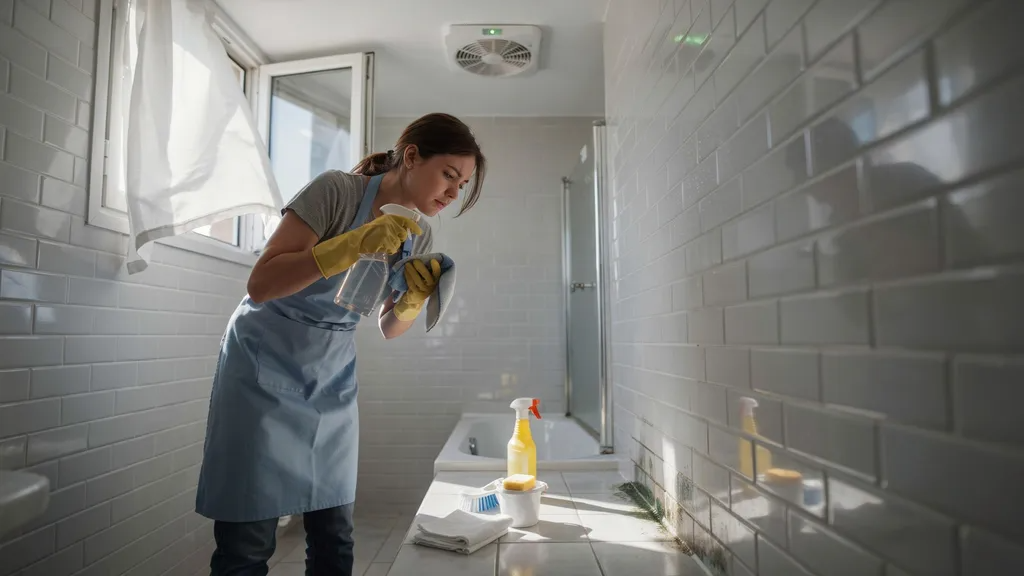
Open a window or turn on the exhaust fan before you begin. Good airflow helps clear fumes from cleaning products.
It also keeps you from breathing in mold spores while you scrub. This small step makes the whole cleaning process safer for you and anyone nearby in the house.
Step 2: Choose Cleaning Method Based on Mold Level
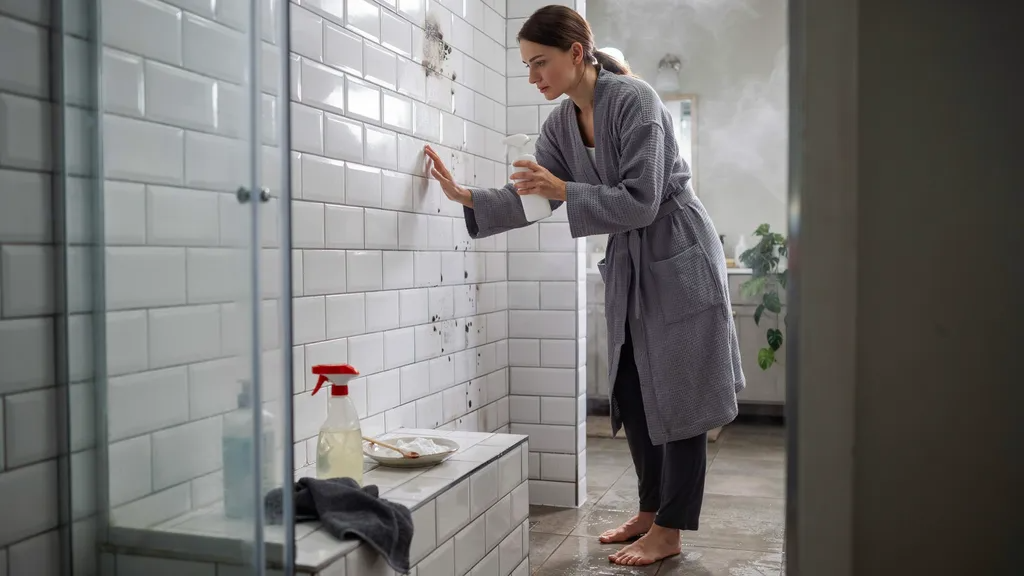
Light mold often clears up with vinegar alone. Stubborn stains may need baking soda paste. Heavy mold growth usually calls for a bleach solution.
Pick the method that matches what you see in your shower, so you do not waste time or product on the wrong approach.
Step 3: Apply Cleaner and Let It Sit Properly

Spray or spread your chosen cleaner directly on the mold. Do not rush this step. Give it the full sit time, whether that is ten minutes or an hour.
This time lets the solution break down the mold at its root, not just on the surface.
Step 4: Scrub Affected Areas Thoroughly

Use a stiff brush or old toothbrush to scrub grout lines and corners. Apply steady pressure, but do not scratch tile finishes.
Focus on spots where mold looks darkest. Thorough scrubbing removes both the stain and the mold growing underneath it.
Step 5: Rinse and Dry Surfaces Completely

Rinse every area with clean water to remove leftover cleaner and loose mold. Dry the surfaces with a towel or let the fan run for a while.
Leftover moisture can let mold return fast, so this final step matters just as much as the scrubbing.
Safety Tips While Removing Black Mold in Shower
Stay safe while you clean with these quick reminders.
- Wear rubber gloves to protect your skin from cleaners and mold.
- Keep the bathroom door open or fan running for fresh air.
- Never mix bleach with other cleaning products.
- Use a mask if you have allergies or breathing issues.
- Wash your hands well after you finish cleaning.
How to Prevent Black Mold in Shower from Coming Back
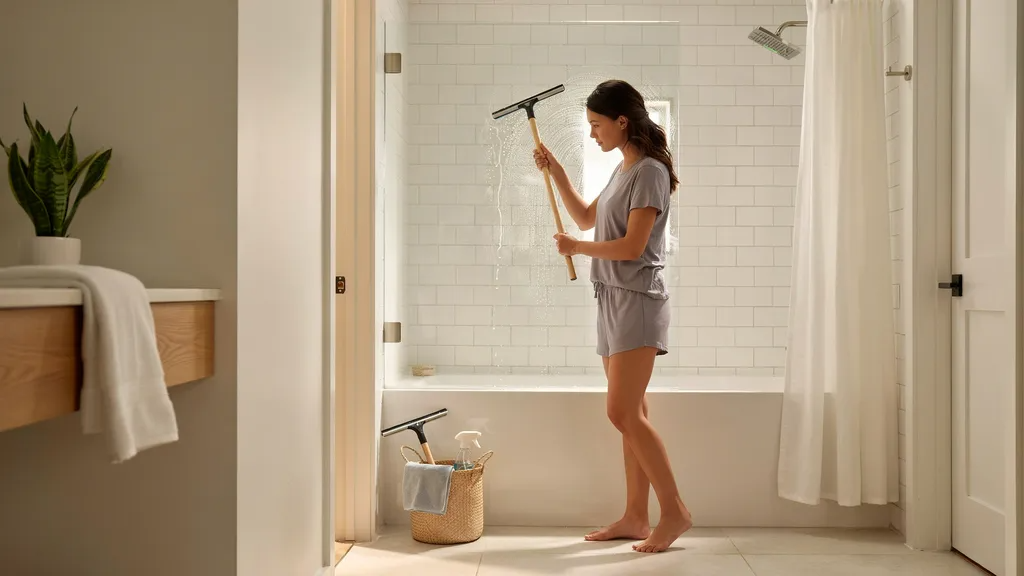
Keeping mold away is easier than removing it again. Run your exhaust fan during and after every shower for at least twenty minutes.
Wipe down tiles and glass doors with a squeegee after each use. Wash your shower curtain or liner once a month.
Fix any leaks around pipes or tiles right away. Keep grout sealed and reapply sealant once a year.
Let your bathroom dry out fully between uses by leaving the door open. These small habits cut down moisture, and less moisture means mold has no place left to grow.
Conclusion
I know dealing with black mold in shower spots feels annoying. I have been there, scrubbing away on a Sunday morning, wondering if it would ever fully go.
But with the right steps, it does get easier. Try one method this week and see the difference for yourself.
Your bathroom can stay fresh without constant worry. If this guide helped you, drop a comment below and let me know how it went.
Feel free to share this with someone who needs it too.
Frequently Asked Questions
Is black mold in shower dangerous to my health?
It can cause coughing, allergies, or skin irritation in some people, so it is best to clean it quickly.
Can I remove black mold in shower without bleach?
Yes, vinegar and baking soda both work well for light to moderate mold growth.
How often should I clean my shower to avoid mold?
I clean mine once a week and wipe it down after each use to keep mold from settling in.
Why does black mold keep coming back after I clean it?
Leftover moisture and poor airflow are usually the cause, so drying and ventilation matter a lot.
Should I call a professional for black mold in shower?
If the mold covers a large area or keeps returning despite cleaning, it is smart to get expert help.